Key Takeaways
-
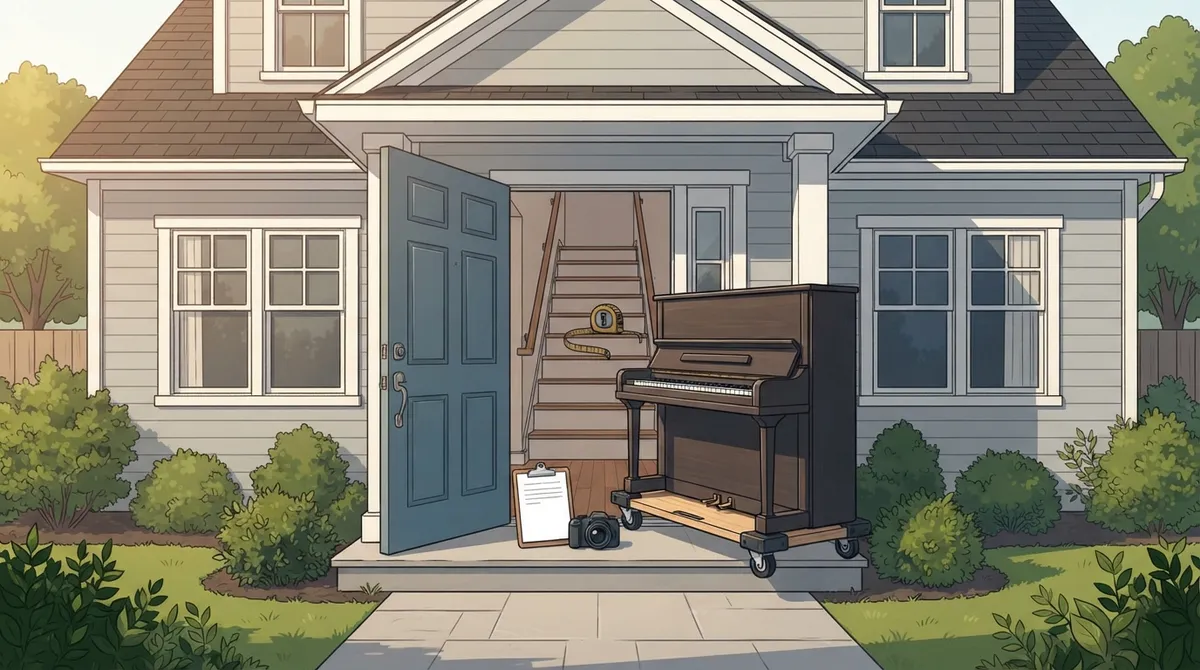
Check the full route before booking: measure doors, hallways, and turns, count stairs, and photograph the piano and exit path so the crew can plan equipment and avoid surprises.
-
Avoid DIY piano moves with friends and a pickup truck; pianos can gouge floors, damage stairs, injure backs, and tip or slide in a truck bed.
-
Don't leave a piano at the curb unless your local bulk program explicitly accepts it, since many programs cap items around 150 to 200 pounds and pianos can exceed that.
-
Try donation or resale first if the piano is playable and in decent shape, but confirm acceptance in writing since groups may decline or expect you to pay moving costs.
-
Get a written quote that specifies labor, floor and wall protection, stair or disassembly surcharges, and disposal fees, because prices vary widely by piano type and access.
-
Expect that a piano can be dismantled and its metal, hardware, and wood separated for recycling where local facilities accept them, though no company can guarantee every part is recycled.
An old piano can sit in a living room for years. Nobody plays it. Nobody wants to move it. And one day you decide it has to go. That’s when the real trouble starts. Pianos are heavy, awkward, and surprisingly easy to mess up when you try to move them yourself.
Here in Brandon, we hear the same story again and again. Someone tries a quick DIY move, a friend’s truck, or a curbside drop-off. Then comes a gouged floor, a hurt back, or a fine from the city. The good news? Every one of these problems is avoidable. If you’re planning junk piano removal, a little knowledge goes a long way.
In this friendly guide, we’ll walk through five common mistakes, plus simple fixes for each one. Whether you’re a busy homeowner, a property manager clearing a unit, a real estate agent staging a listing, or a family downsizing a loved one’s home, you’ll find clear steps here. Let’s make this job easier, safer, and a lot less stressful.
Why Junk Piano Removal Is Not Like Other Hauling Jobs
A couch is bulky. A piano is bulky and dense. Reported weights vary by model, but many uprights fall around 300 to 500 pounds, while grand pianos often land between 500 and 1,200 pounds or more. Older or larger instruments can weigh even more. That weight sits in an awkward frame that does not bend, tilt, or squeeze through tight spaces easily.
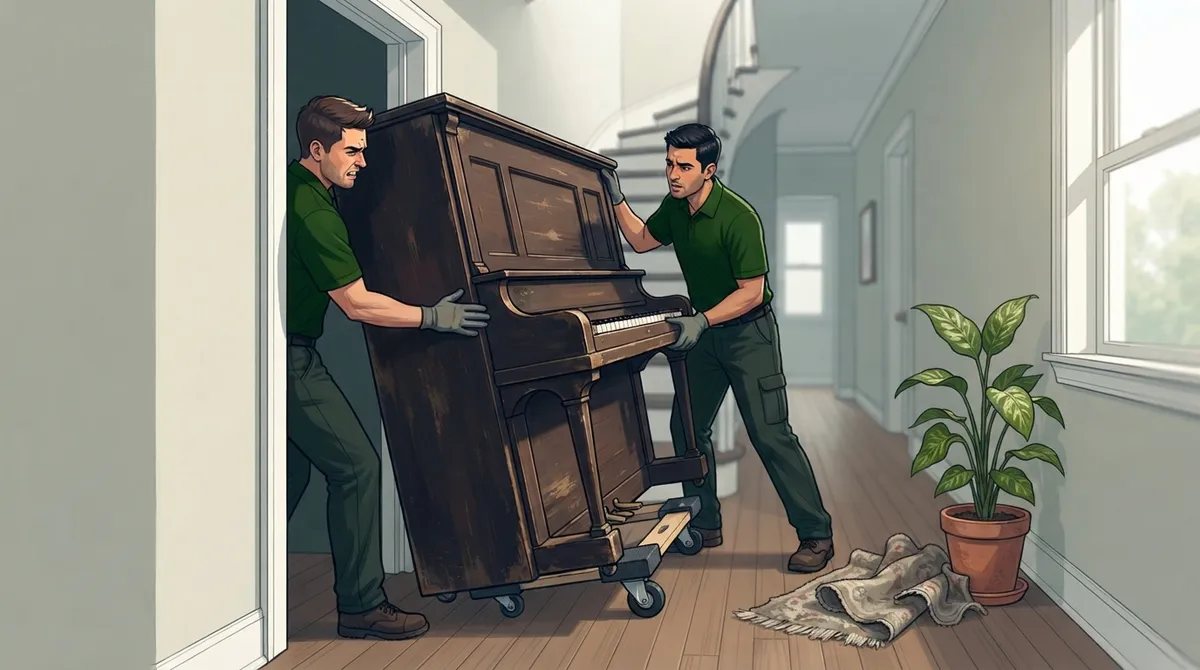
That is why junk piano removal counts as a specialized bulky-item job. A wrong move can damage stairs, walls, and floors. Worse, it can cause serious injury. A piano can shift suddenly on a slope, a step, or a threshold.
Here is what makes pianos tricky:
- Weight: Even a small upright can be too heavy for two untrained people.
- Shape: Pianos are tall, deep, and hard to grip.
- Fragile parts: Legs, casters, and pedals can snap under pressure.
- Tight access: Doorways, turns, and stairs add risk fast.
Now let’s look at the five mistakes that cost people the most time and money.
Mistake 1: Skipping the Access Check Before Booking
The first mistake happens before anyone lifts a finger. People book a pickup without thinking about how the piano will actually leave the house. Then the crew arrives and discovers a narrow hallway, a sharp turn, or a flight of stairs nobody mentioned.
A good removal plan starts with a simple walk-through. Look at the route from the piano to the truck. Think about every step along the way.
What to Check Before You Call
Grab a tape measure and run through this quick list:
- Identify the piano type. Is it an upright, a spinet, a baby grand, or a full grand?
- Measure the piano. Note the width, depth, and height.
- Check doorways and hallways. Measure the narrowest points and look for tight turns.
- Count the stairs. Note any landings, railings, or outdoor steps.
- Look at parking. Can a truck get close to the door?
- Take photos. Snap pictures of the piano and the exit path.
Photos help a crew spot problems and bring the right equipment. If the piano is already in a garage or on a covered patio, say so. Easy access often makes the job simpler and the quote clearer.
Mistake 2: Trying the DIY Move With Friends and a Pickup Truck
We get it. Pizza, a few buddies, and a borrowed truck sound like a budget-friendly plan. But pianos punish good intentions. Without the right tools, trained hands, and a solid plan, the risks pile up fast.
Here is what can go wrong with a DIY piano move:
- Scratched or cracked floors and tile
- Dented walls and chipped door frames
- Broken stair rails and damaged steps
- Pulled muscles, crushed fingers, and worse
- A piano tipping or sliding in the truck bed
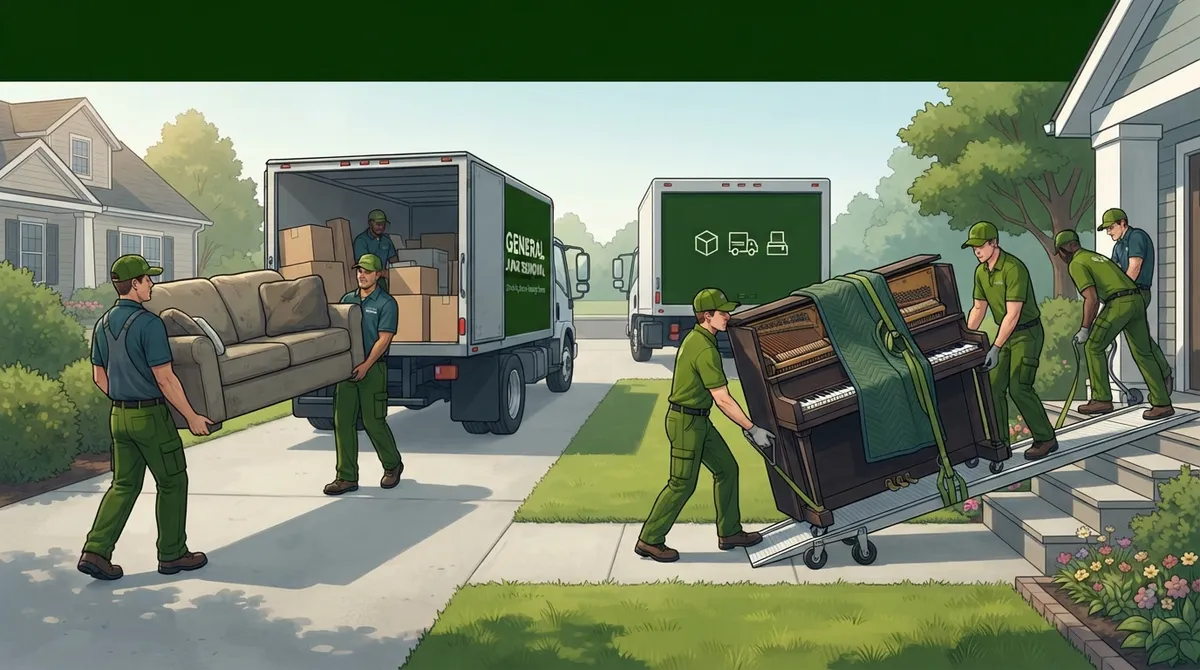
How many people does it take? There’s no single number. It depends on the piano, the route, and the equipment. A professional crew uses straps, dollies, ramps, and floor protection built for heavy, awkward loads. They also know how to read a tricky staircase.
If you want a pro crew that handles heavy items every week, take a look at our junk removal in Brandon services. For a fuller picture of how we handle big, awkward loads, our guide on pro junk removal vs. DIY hauling breaks it all down.
Mistake 3: Leaving the Piano at the Curb
This one is more common than you’d think. Someone wheels (or drags) the old piano to the curb and hopes the city will take it. Sometimes a sign taped to the front says “free.” Then days pass, and nothing happens.
Here is the catch. Municipal bulky-item rules vary from place to place. Some programs cap accepted items at roughly 150 to 200 pounds, which would exclude most pianos. Others need an appointment, a special fee, or advance approval. A piano should not sit at a curb or in a residential trash area unless your local program clearly allows it.
Before you move anything outside, check these things with your local solid waste office:
- Does bulk pickup accept pianos at all?
- What are the weight and size limits?
- Do you need an appointment?
- Are there fees?
- Does the piano need to be taken apart first?
A piano left outside can also get rained on, warped, and damaged. It becomes an eyesore and may bring complaints from neighbors or an HOA. Many Brandon-area homeowners find that a scheduled pickup from inside the home or garage is far easier than fighting with the curb. Our county pickup vs. private bulk item removal article walks through the tradeoffs.
Mistake 4: Assuming Nobody Wants a Playable Piano
Here’s a mistake that costs you the chance to do some good. Some old pianos are not junk at all. If yours still holds a tune and the keys work, someone might happily take it. Skipping the reuse step means you could pay for disposal when a donation was possible.
Donation or resale makes the most sense when a piano is playable and in decent shape. Schools, churches, music programs, dealers, and nonprofits sometimes accept them. But acceptance is never guaranteed. Many groups have limited space. Some also expect the owner to pay for moving.
Reuse Versus Breakdown: A Quick Comparison
| Option | Best For | Watch Out For |
|---|---|---|
| Donation | Playable pianos in good shape | Groups may decline; you may pay moving costs |
| Resale | Well-kept or valuable instruments | Time, listing effort, and buyer logistics |
| Dismantle and recycle | Pianos past repair | Recycling depends on local facilities |
| Professional junk removal | Any piano you need gone safely | Confirm what’s included in the quote |
A simple tip: confirm acceptance in writing before you arrange transport. That avoids a surprise at the door. And if the piano isn’t a fit for donation, a hauling crew can take over from there. If you’re curious about the bigger picture, see our article on junk removal vs. donation.
Mistake 5: Not Knowing What You’re Paying For
The last mistake is about money. People grab the first quote, or the cheapest one, without asking what it covers. Then extra fees show up at the end.
Online price examples vary a lot. One 2026 junk-removal source lists roughly $200 to $350 for an upright and $300 to $550 for a baby grand or grand. Another national guide reports about $200 to $400 for piano removal. These numbers are useful context, not guarantees. Prices depend on your market, the piano, and your home’s access. Always confirm costs locally.
Questions to Ask Before You Say Yes
- Does the quote include labor, crew size, and equipment?
- Is floor and wall protection included?
- Do stairs, tight turns, or long carries change the price?
- Is disassembly extra if the piano can’t fit through a door?
- Are disposal or recycling fees included?
- Is the price firm, or just a ballpark?
A clear, written estimate helps you avoid surprises. At Wayne & Sons Landscaping & Junk Removal, we believe in transparent pricing with no unpleasant surprises. You’ll know what to expect before the crew starts. And we keep our service affordable for homeowners, landlords, and families alike.
What Actually Happens to Your Old Piano?
Many people wonder where the piano goes after the truck pulls away. The answer depends on its condition.
If a piano can’t be reused, a hauler may dismantle it and separate the recoverable materials. These can include the cast-iron plate and other metals, hardware, and wood, where local facilities accept them. One 2026 disposal article estimates a piano may be roughly 70 to 80 percent recyclable by weight when fully separated. That figure comes from one source, so treat it as an estimate. Real recovery depends on the piano’s materials and what your local recycling outlets will take. No honest company can promise that every part gets recycled.
Still, responsible handling matters. It keeps bulky waste out of places it doesn’t belong. You can read more about this in our post on whether junk removal companies recycle.
A Simple Step-by-Step Plan for Piano Removal
Ready to do this the smart way? Follow these steps:
- Check the piano’s condition. Does it play? Could someone want it?
- Try reuse first. Ask schools, churches, or music programs, and confirm acceptance.
- Check local rules. Ask your city about bulk pickup limits and fees.
- Map the exit path. Measure doors, count stairs, and take photos.
- Get a written quote. Ask what’s included and what could add cost.
- Clear the path. Move furniture, rugs, and decor out of the way.
- Let the crew do the heavy work. Stay back and keep kids and pets clear.
That’s it. With a little prep, the actual removal often takes less time than you’d expect.
Who Benefits Most From Professional Piano Removal?
Almost anyone with a piano to move can benefit, but a few groups really feel the difference:
- Downsizing seniors and families: Estate clear-outs are emotional enough. Letting a crew handle the heavy lifting protects backs and saves energy.
- Real estate agents: A bulky old piano can crowd a listing. Fast removal helps a home show better.
- Property managers: Tenants sometimes leave big items behind. A pro crew clears units quickly so you can turn them over.
- Contractors and renovators: A piano in a work zone is a hazard. Removing it early keeps projects on schedule.
- Small business owners: Old pianos left in lobbies, studios, or event spaces can be cleared with minimal disruption.
Furniture and large-item jobs often go hand in hand. If you’re clearing out more than a piano, our furniture removal in Brandon and junk hauling in Brandon services can handle the whole load in one visit.
Why Local Brandon Homeowners Choose Wayne & Sons
Wayne & Sons Landscaping & Junk Removal has served Brandon and nearby communities for over 15 years. We’re a local team that knows the neighborhoods, the driveways, and the tight Florida-home layouts that can make big items tricky. Our crews show up on time, protect your home, and treat every job with care.
We serve Brandon, Apollo Beach, FishHawk, Gibsonton, Riverview, Ruskin, Seffner, Sun City Center, Valrico, and Wimauma. Whether it’s an old upright in the living room or a grand piano in the garage, we’ll work out a safe plan. We pride ourselves on effortless convenience, transparent pricing, and exceptional customer service from start to finish.
Curious what neighbors say? You can read our customer reviews, or visit us on Google — Wayne & Sons Landscaping & Junk Removal to see feedback from other Brandon-area customers. You can also find us on Thumbtack. If you want to learn more about the area we serve, here’s a quick look at Brandon, Florida.
Final Thoughts: Make Piano Removal Easy
Let’s recap the five mistakes: skipping the access check, trying a DIY move, leaving the piano at the curb, assuming nobody wants it, and not knowing what you’re paying for. Avoid these, and junk piano removal becomes a simple, safe project instead of a weekend-long headache.
Remember, every situation is different. Weights, local rules, and prices all vary, so always confirm the details for your own home and your own city. When in doubt, ask questions and get a clear written quote.
Ready to say goodbye to that old piano without the stress? Contact us today for a friendly, no-surprise estimate, or call us to talk it through. You can also text us at 813-452-1570 with a few photos of your piano and the path out. We’re happy to help you reclaim your space.
FAQs
Q: How much does it cost to remove a piano?
A: Published examples vary by market, with some 2026 sources showing roughly $200 to $400 for many pianos and higher for grands. Your final price depends on piano type, stairs, access, and disposal fees, so always get a clear written quote before booking.
Q: Can a junk removal company take a piano from inside my house?
A: Yes, a trained crew can usually remove a piano from inside your home. They’ll check the route, protect your floors and walls, and use the right equipment. Sending a few photos ahead of time helps them plan the safest way out.
Q: Can I donate or sell an old piano that no longer works well?
A: It’s possible, but not guaranteed. Donation and resale work best for playable pianos in decent shape, and many groups have limited space or ask you to pay moving costs. Confirm acceptance first, and if no one wants it, professional removal is a great backup plan.
Q: What happens to a piano after junk removal?
A: If it can’t be reused, a hauler may take it apart and separate recoverable materials like metal parts, hardware, and wood where local facilities accept them. What actually gets recycled depends on local markets, so no one can promise every part will be reused.
Q: Does my city offer bulk pickup for pianos?
A: It depends on where you live. Some bulk programs cap items at around 150 to 200 pounds, which would rule out many pianos, so check weight limits, appointments, and fees with your local office before putting anything at the curb.
Our Service Area