Key Takeaways
-
Observe your yard's water flow after heavy rain before any hardscape installation to identify problem areas; skip this assessment and you risk cracked or shifting pavers within 1-2 years.
-
Proper grading and resloping is foundational to drainage success—without correct slope, water pools at the lowest point instead of flowing away from your home, especially critical in Riverview's flat terrain.
-
Choose the right drainage solution for your specific yard type: French drains for underground water buildup, dry creek beds for sloped yards, and channel drains for patios and driveways.
-
Remove old concrete, cracked pavers, and failed drainage materials before starting new hardscape work; building on top of existing problems leads to uneven surfaces and repeated drainage failures.
-
Invest in proper drainage installation now to avoid expensive repairs later; foundation damage and paver replacement costs far exceed the upfront investment in correct grading and drainage systems.
-
Hire a contractor with local Riverview experience who understands Florida's heavy summer rains and soil drainage patterns, as solutions effective in drier climates often fail in this region.
If your Riverview yard turns into a swamp every time it rains, you’re not alone. Standing water near your patio or walkway isn’t just annoying. It can crack pavers, erode soil, and even threaten your home’s foundation. The good news? Smart hardscape for drainage Riverview planning can fix these problems for good, and it doesn’t have to be complicated once you know what to avoid.
At Wayne & Sons Landscaping & Junk Removal, we’ve spent over 15 years helping homeowners across Brandon, Riverview, and nearby communities solve drainage headaches with smart hardscape design. We’ve seen the same mistakes over and over, and we’re here to help you skip them. Let’s walk through the six biggest drainage hardscape mistakes Riverview homeowners make, and how you can avoid them before your next project.
Why Drainage Matters So Much in Hardscape Projects
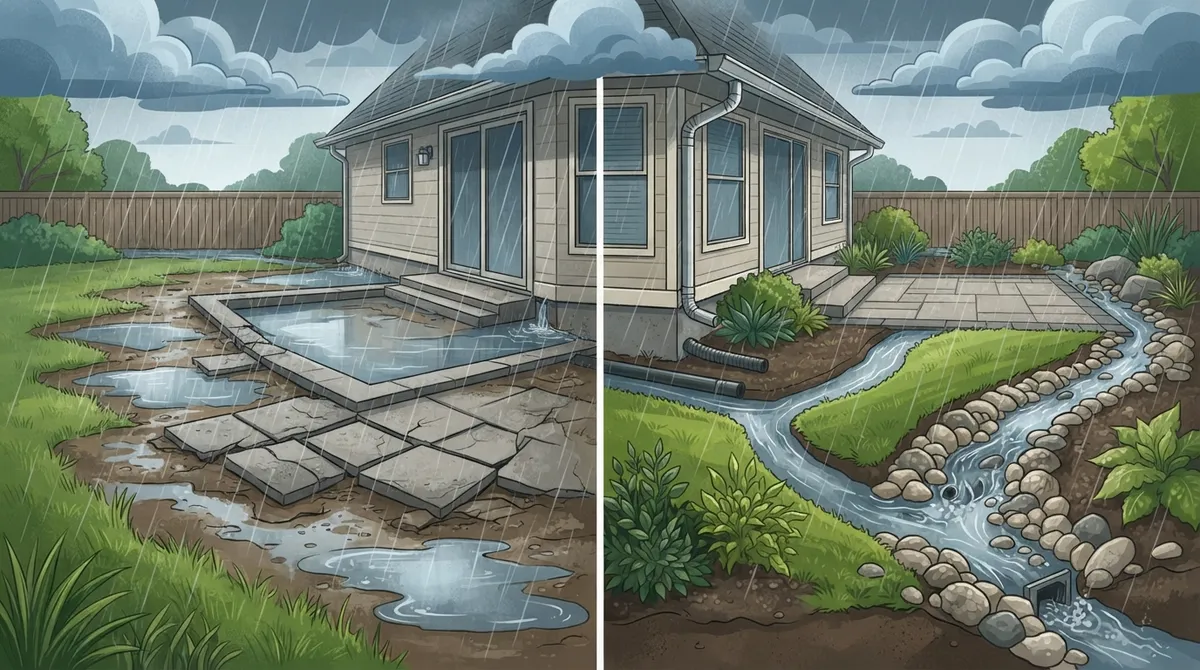
Hardscaping covers all the non-living parts of your yard, like patios, walkways, retaining walls, and entry areas. These features look great, but they can go wrong fast if water has nowhere to go. Poor drainage planning is one of the top reasons hardscape projects fail early.
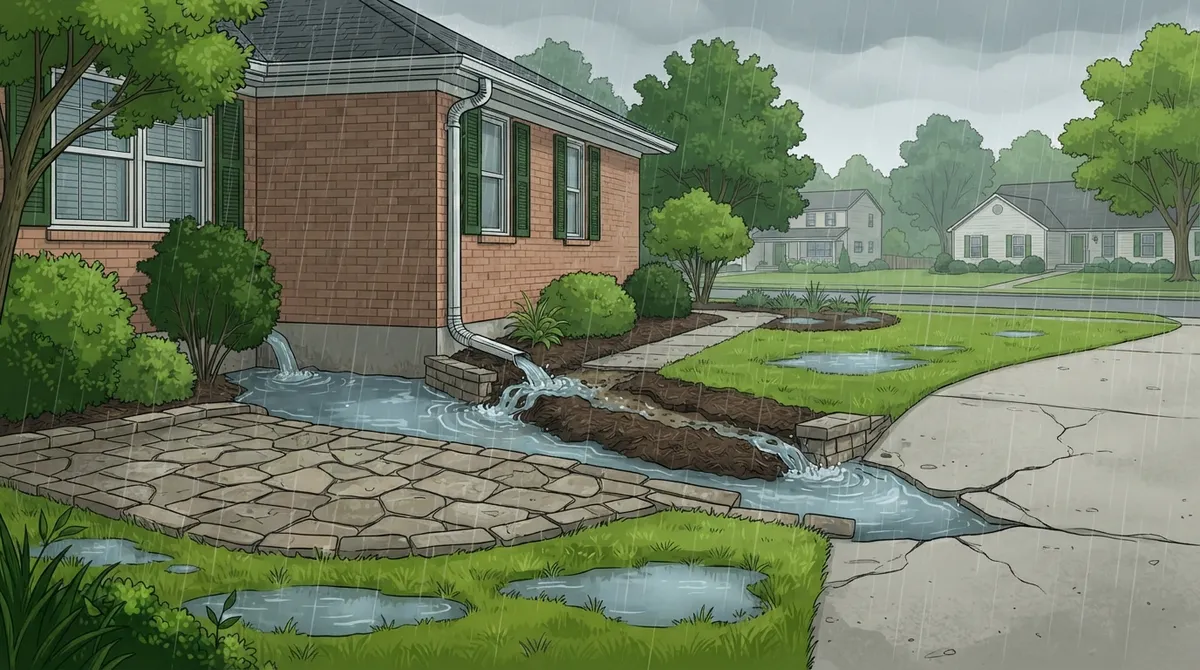
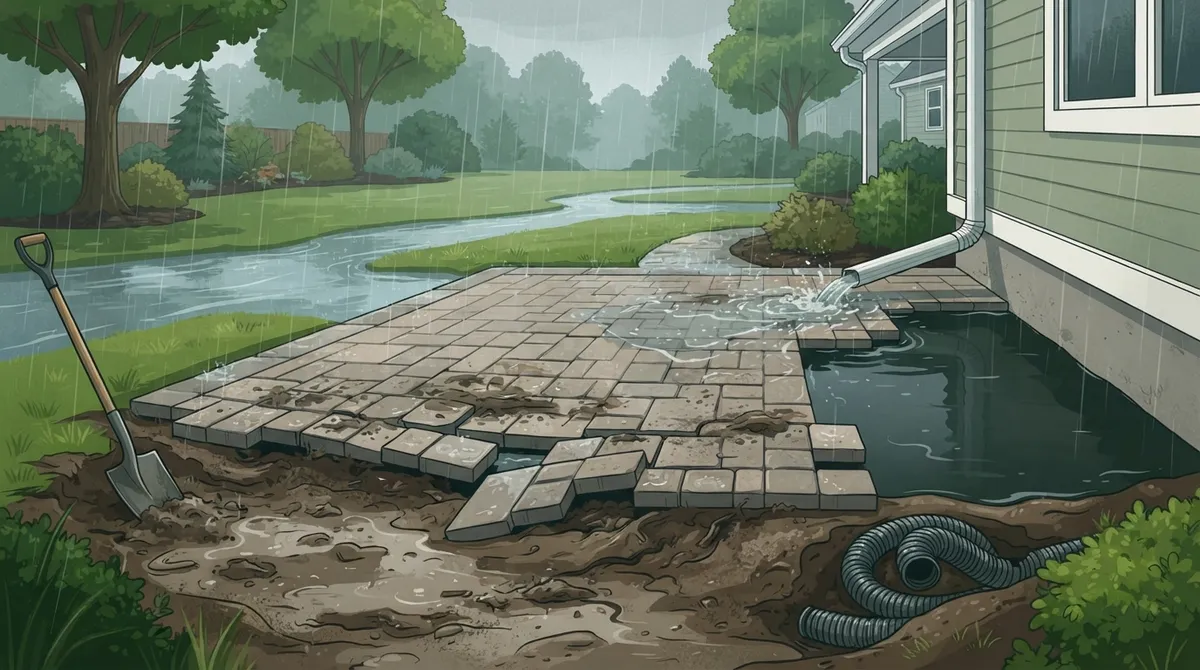
Riverview’s flat terrain and heavy summer storms make drainage planning even more important. Without the right grading, trenching, or drainage systems, water pools around your home instead of flowing away from it. That pooling water leads to shifting pavers, soggy lawns, and even foundation risk over time.
What Is Hardscape Drainage, Exactly?
Hardscape drainage means designing patios, walkways, and walls to work together with water flow instead of against it. It includes grading the land, adding trench drains, and sometimes installing French drains or dry creek beds. The goal is simple: move water away from your house and outdoor living spaces.
Mistake 1: Skipping the Site Assessment Before Installation
Many homeowners jump straight to picking pavers or stone without checking how water actually moves through their yard. This is a costly mistake. Experts recommend watching your yard’s water flow after a heavy rain before any hardscape installation begins.
Watch where puddles form. Notice which corners stay wet longest. This simple observation tells you exactly where drainage problems will show up later. Skipping this step is one of the fastest ways to end up with cracked or shifting pavers within a year or two.
Simple Steps to Assess Your Yard
- Wait for a heavy rainstorm and observe your yard the next day.
- Mark areas where water pools for more than a few hours.
- Check for erosion near downspouts and low spots.
- Note any slope issues near your patio or walkway plans.
- Share these observations with your landscaping contractor before work begins.
Mistake 2: Ignoring Proper Grading and Resloping
Grading is the process of shaping the land so water flows away from your house instead of toward it. Skipping this step is a huge mistake, even if your hardscape materials look beautiful. Without the right slope, water finds the lowest point and stays there.
Riverview’s flat lots often need extra attention here. Our team frequently handles landscaping services that start with grading and resloping before any patio or wall goes in. It’s not the most exciting part of the project, but it’s the foundation for everything else.
Mistake 3: Choosing the Wrong Drainage Solution for Your Yard
Not every drainage fix works for every yard. Picking the wrong one wastes money and leaves the problem unsolved. Here’s a quick breakdown of common options and where they work best.
| Drainage Solution | Best Used For | How It Works |
|---|---|---|
| French Drains | Yards with underground water buildup | Buried perforated pipe redirects water below ground |
| Dry Creek Beds | Sloped yards with visible runoff paths | Rock-lined channel guides water naturally |
| Channel Drains | Patios, driveways, pool decks | Surface grates capture and redirect water |
| Downspout Catch Basins | Areas near gutters and roof runoff | Collects water and routes it through pipes away from the home |
| Retaining Walls | Sloped or eroding yards | Stabilizes soil and controls runoff direction |
A good contractor will evaluate drainage systems and adjust them to redirect runoff and reduce erosion around your buildings and landscaped areas. This isn’t a one-size-fits-all situation, and getting it wrong means paying twice.
Mistake 4: Forgetting to Remove Old Materials First
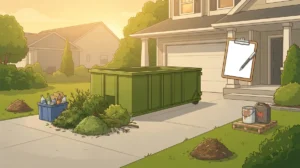
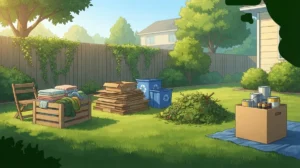
Here’s something a lot of homeowners overlook: you can’t just build new hardscape on top of old, broken concrete or failed drainage materials. Old pavers, cracked slabs, and storm debris need to go before new work starts.
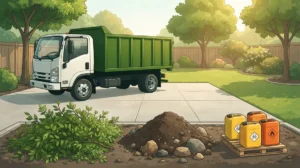
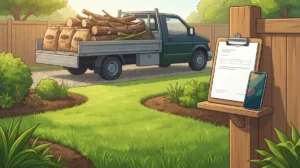
This is where junk removal services become part of the hardscape process. Whether it’s demolition cleanup or hauling away old slabs, clearing the site properly sets you up for success. Skipping this step often leads to uneven surfaces and drainage problems that repeat themselves.
What Usually Needs to Be Removed
- Old or cracked concrete slabs
- Broken or shifted pavers
- Failed drainage pipes or gravel beds
- Storm debris and fallen branches
- Leftover construction materials from past projects
- Overgrown roots interfering with grading
If a recent storm left your yard a mess, our storm debris removal team can clear things out fast so your hardscape project isn’t delayed.
Mistake 5: Underestimating the Cost of Doing It Right
Some homeowners try to cut corners because they assume drainage hardscape work is too expensive. But skipping proper installation almost always costs more later in repairs. Minor drainage repairs can run in the low hundreds, while full renovations involving retaining walls and patios can climb much higher depending on scope.
The truth is, investing in proper drainage now saves you from replacing cracked pavers or fixing foundation damage down the road. Think of it like changing your oil regularly instead of waiting for the engine to fail.
Signs You Need Drainage Hardscape Work Soon
- Standing water that lasts more than a day after rain
- Cracked or sinking pavers near your patio
- Soil erosion along walkways or slopes
- Water pooling near your home’s foundation
- Soggy patches that kill grass or plants
- Mosquito activity increasing in certain yard areas
Mistake 6: Hiring Someone Without Local Riverview Experience
Not every landscaping company understands Riverview’s specific soil and rainfall patterns. Local experience matters because drainage solutions that work in drier climates often fail here. You need a team that knows how Florida storms behave and how local soil drains, or doesn’t.
Wayne & Sons Landscaping & Junk Removal has served Brandon, Florida and surrounding areas, including Riverview, for over 15 years. We understand how heavy summer rains interact with local soil, and we design hardscape drainage solutions that actually hold up. Check out our reviews to see what neighbors are saying, or see what our Wayne & Sons Landscaping & Junk Removal customers say on Google by visiting Visit us on Google — Wayne & Sons Landscaping & Junk Removal.
How Landscaping and Junk Removal Work Together for Drainage Projects
A successful hardscape drainage project usually needs both landscaping expertise and junk removal muscle. Here’s how the process typically flows from start to finish.
| Project Stage | What Happens | Why It Matters |
|---|---|---|
| Assessment | Evaluate water flow, grading needs, and existing materials | Prevents future cracking and shifting |
| Demolition & Cleanup | Remove old concrete, pavers, and debris | Creates a clean, stable base |
| Grading & Resloping | Shape land to direct water away from structures | Reduces erosion and pooling risk |
| Drainage Installation | Add French drains, channel drains, or dry creek beds | Actively manages runoff long-term |
| Hardscape Installation | Install patios, walkways, or retaining walls | Finishes the project with lasting durability |
This is exactly why we offer both services under one roof. Our team handles the junk hauling and cleanup, then moves into grading and drainage-focused hardscape work without any gaps in communication between separate companies.
Tips for Maintaining Your Drainage Hardscape Long-Term
Once your project is finished, a little maintenance keeps everything working smoothly for years. Regular upkeep is much easier than dealing with a full re-do down the road.
- Clear leaves and debris from drains every few months
- Check for new cracks in pavers after big storms
- Trim nearby trees so roots don’t interfere with drains
- Keep gutters clean so downspout basins work properly
- Watch for new low spots that develop over time
- Schedule an annual check-up with a landscaping professional
Speaking of trees, overgrown roots and branches can quietly damage drainage systems over time. If you need palm tree trimming in Riverview or general tree care, keeping growth in check protects your hardscape investment too.
Quick Comparison: DIY vs Professional Drainage Hardscape Work
| Factor | DIY Approach | Professional Installation |
|---|---|---|
| Soil & Water Assessment | Guesswork, often inaccurate | Based on years of local experience |
| Materials & Debris Removal | Limited hauling capacity | Full-service demolition and haul-away |
| Long-Term Durability | Higher risk of cracking or shifting | Built to handle Florida storms |
| Time Investment | Weekends, sometimes months | Efficient, scheduled completion |
For a deeper look at how these pieces fit together, check out our guide on how to plan a hardscape Riverview project that lasts. You might also enjoy our tips on patio pavers Riverview homeowners love for more design inspiration once drainage is handled.
Bringing It All Together
Good drainage isn’t just about avoiding a wet lawn. It protects your home’s foundation, keeps your hardscape looking sharp, and saves you money on repairs down the line. Avoiding these six mistakes puts you way ahead of most Riverview homeowners tackling drainage on their own.
Whether you need site assessment, grading, debris removal, or a full hardscape installation, Wayne & Sons Landscaping & Junk Removal is ready to help. We proudly serve Riverview and the greater Brandon area with honest pricing and dependable work. Ready to fix your yard’s drainage problems for good? Contact us today, or give us a call to get your free estimate started.
FAQs
Q: What is hardscape drainage in landscaping?
A: Hardscape drainage means designing patios, walkways, and walls so water flows away from your home instead of pooling around it. It usually includes grading, trench drains, and sometimes French drains or dry creek beds working together with your hardscape features.
Q: What hardscape materials work best for drainage in Riverview?
A: Permeable pavers, gravel-based dry creek beds, and properly graded stone patios tend to work best in Riverview’s flat, storm-prone landscape. The material matters less than the grading and drainage system underneath it, so don’t skip that planning step.
Q: How much does hardscape drainage installation cost in Riverview?
A: Minor drainage repairs can often run in the low hundreds, while larger renovations involving retaining walls or full patio replacements can climb into the thousands depending on scope. We’re happy to walk you through options that fit your budget with transparent, upfront pricing.
Q: Should old concrete or pavers be removed before installing new drainage?
A: Yes, absolutely. Building new drainage systems or hardscape on top of old, cracked concrete or failed materials almost always leads to repeat problems, so proper removal and cleanup should always come first.
Q: What are signs that my yard needs drainage hardscape work?
A: Watch for standing water that lingers after rain, cracked or shifting pavers, soil erosion, or soggy patches that won’t dry out. If you’re noticing any of these, it’s a good time to have a professional take a look before things get worse.
Our Service Area