Key Takeaways
-
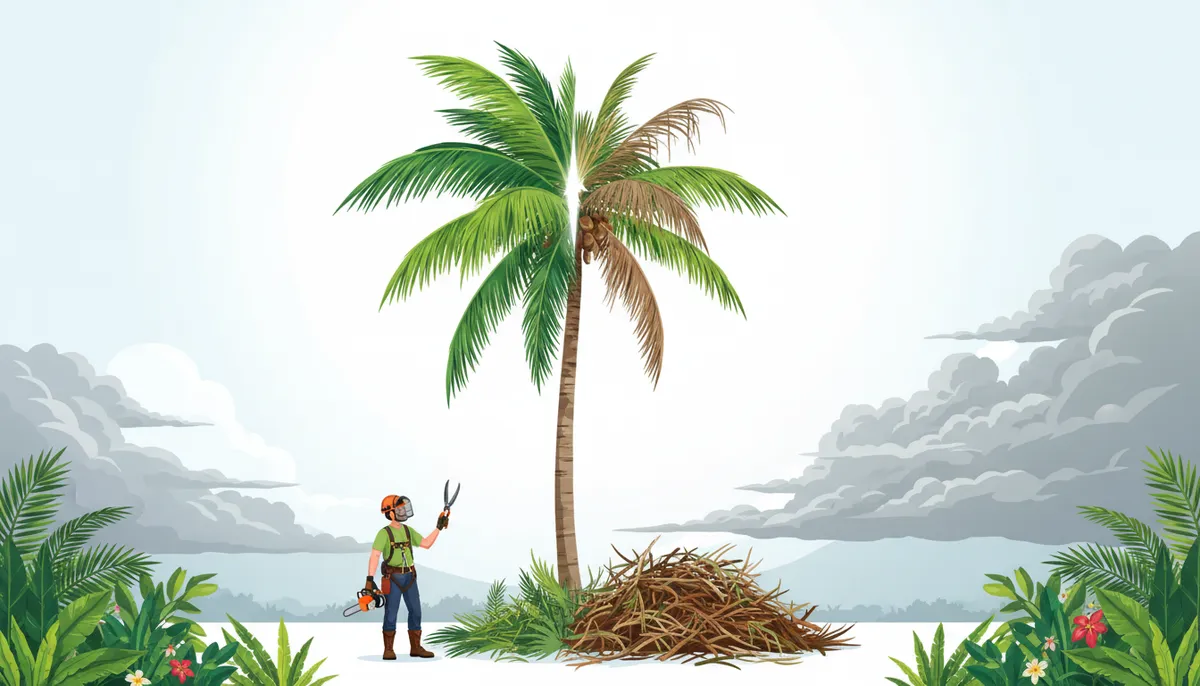
Over-pruning or ‘hurricane cutting’ removes essential green fronds needed for photosynthesis, weakens the trunk permanently, and can kill the tree over time—only dead or damaged fronds should be removed.
-
Palm trees require specialized care different from regular shade trees; improper trimming invites pests, disease, and creates safety hazards like falling dead fronds that can injure people or damage property.
-
Late spring and early summer are the ideal times to trim palms in Florida; avoid heavy trimming before storms, during winter cold snaps, or in fall to prevent stress and vulnerability.
-
Professional palm tree trimming costs $100–$1,500 per tree depending on height and accessibility, but DIY risks and potential tree damage often make professional services a smarter long-term investment.
-
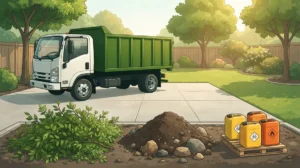
Debris cleanup is critical after trimming—leaving piles of fronds creates pest habitats, fire risks, and yard neglect; reputable services should include removal and haul-away as part of the package.
-
Use sharp, disinfected tools to make clean cuts 2–4 inches from the trunk to prevent disease spread, trunk scarring, and permanent weakening of tree structure.
Palm trees add beauty and value to any property. But improper care can turn a stunning tree into a safety hazard or an eyesore. Many homeowners in the Dover area make costly mistakes when trimming their palms. Some of these errors can damage the tree permanently. Others can create serious safety risks for people and property nearby.
Whether you manage a rental property, are preparing your home for sale, or simply want to keep your yard looking great, knowing what not to do is just as important as knowing best practices. This guide covers the seven most common palm tree trimming mistakes — and how to avoid every single one. If you need expert help, professional palm tree trimming services are available to keep your trees healthy and your property looking its best.
Why Proper Palm Tree Trimming Matters
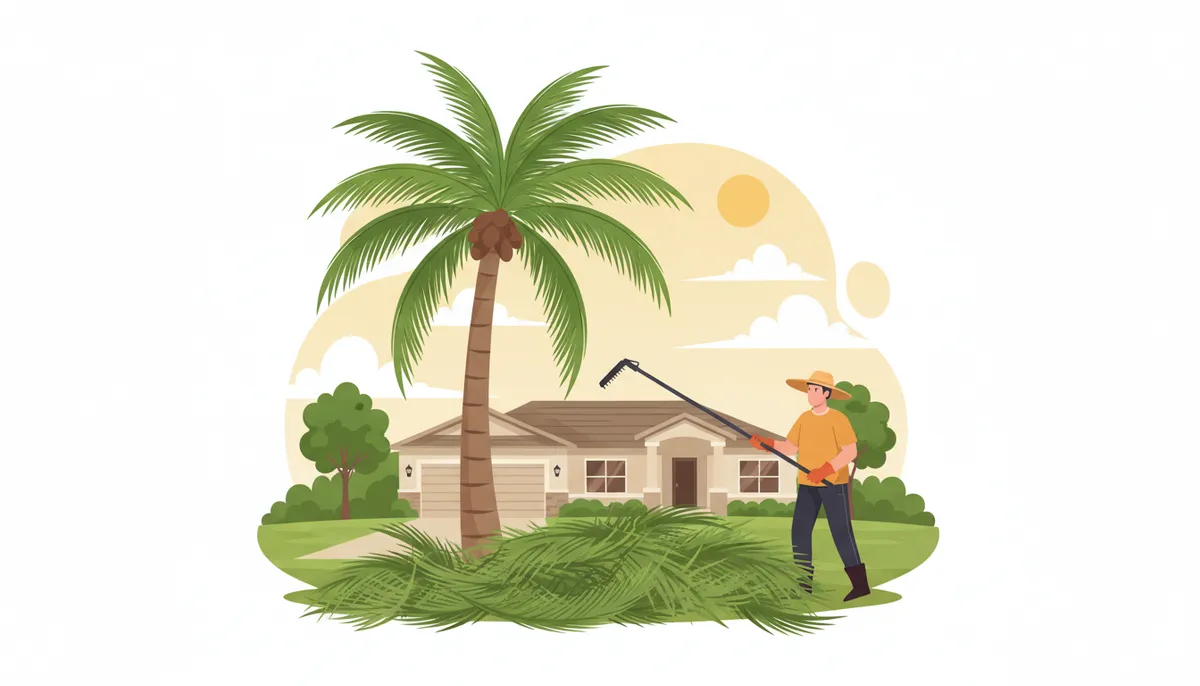
Palm trees are not like regular shade trees. They have unique growth patterns and nutritional needs. Improper trimming can stress the tree, invite pests, and even kill it over time. In Florida’s warm climate, Brandon, Florida and the surrounding areas see rapid palm growth, which makes regular and proper maintenance critical. Skipping or rushing this process creates problems that can be expensive to fix later.
Beyond tree health, there are safety concerns. Dead fronds and overgrown branches can fall without warning. This puts people, pets, vehicles, and structures at serious risk. That is why investing in proper care — or hiring professionals who know what they are doing — is always worth it.
Mistake 1: Over-Pruning or Hurricane Cutting
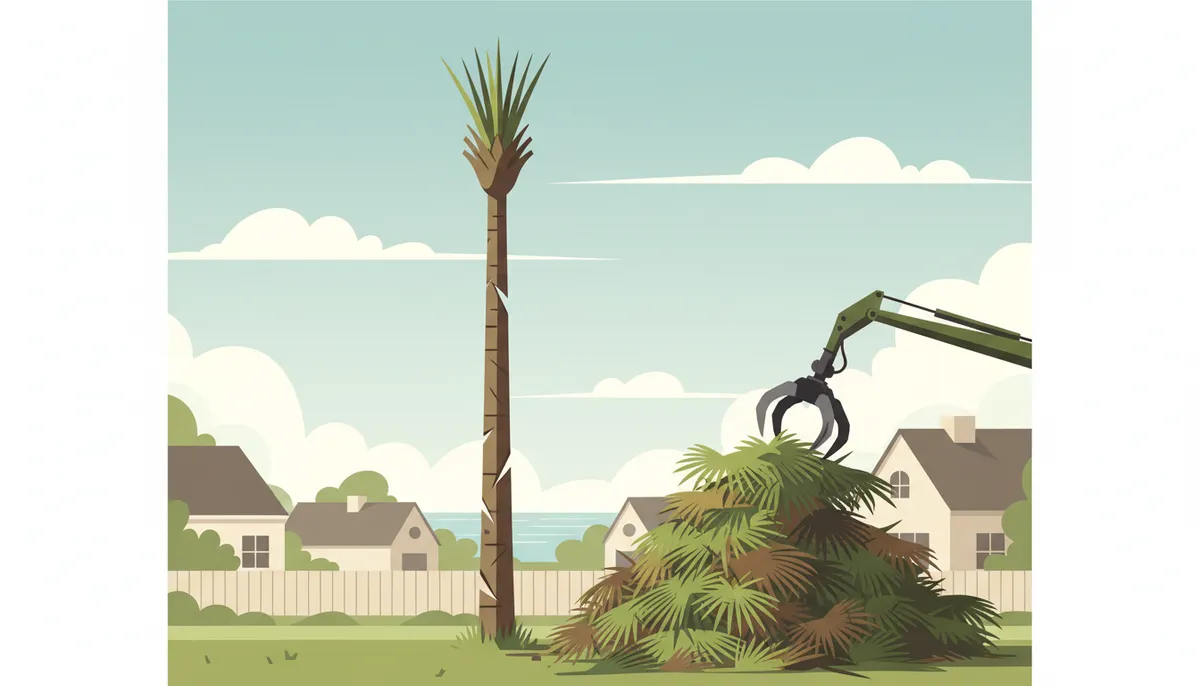
One of the most damaging mistakes is removing too many fronds at once. This is sometimes called “hurricane cutting” because the tree ends up looking stripped and bare. Many people believe this protects the tree from storm damage. In reality, it does the opposite.
Why Over-Pruning Is Harmful
- Removes green fronds the tree still needs for photosynthesis
- Forces the tree to use stored energy reserves, weakening it
- Creates entry points for disease and insects
- Causes a condition called “pencil pointing,” which permanently weakens the trunk
- Can kill the tree over time if done repeatedly
A healthy palm should always retain a full, lush canopy of green fronds. Only dead, brown, or damaged fronds should be removed. If you’re unsure, the landscaping services team at Wayne & Sons can assess your trees and recommend the right trimming plan.
Mistake 2: Trimming at the Wrong Time of Year
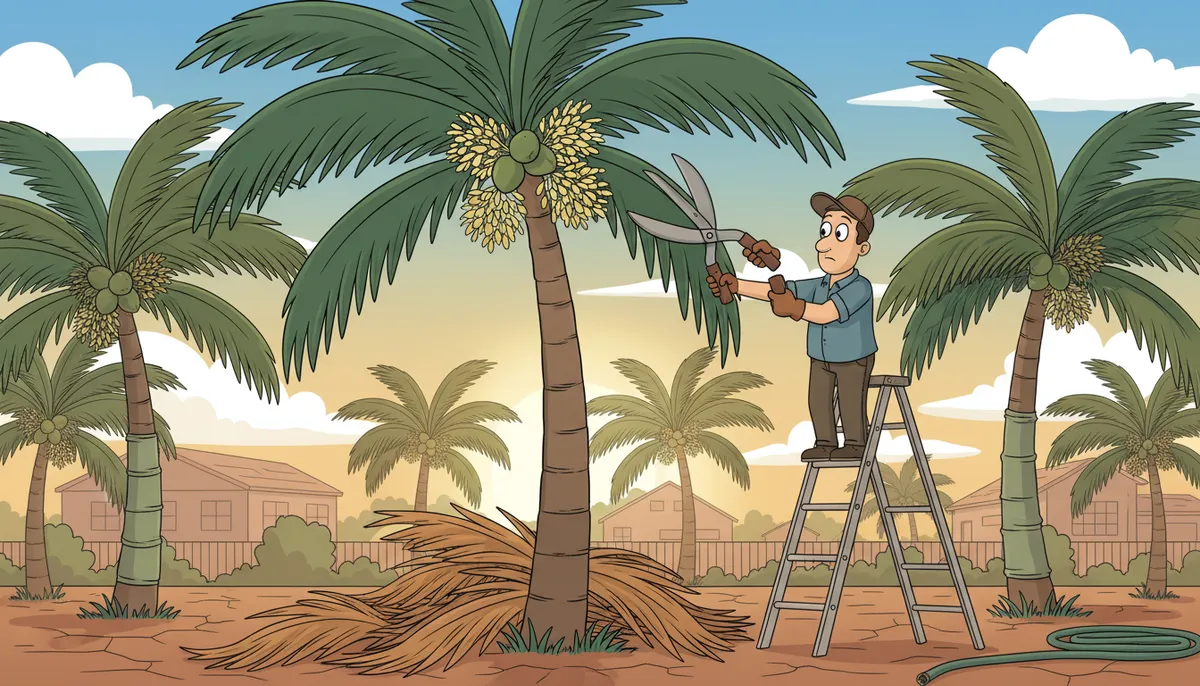
Timing matters more than most homeowners realize. Trimming palms at the wrong time can expose them to cold snaps, pest infestations, or nutritional stress. In Florida’s climate, palms can be trimmed year-round, but late spring and early summer are generally ideal. Avoid heavy trimming just before or during major weather events.
Best and Worst Times to Trim
| Season | Recommendation | Reason |
|---|---|---|
| Late Spring / Early Summer | Best time | Active growth supports recovery |
| Fall | Acceptable with care | Moderate growth, lower stress |
| Winter | Avoid if possible | Cold exposure increases vulnerability |
| During/Before Storms | Avoid | Weakens tree before high winds |
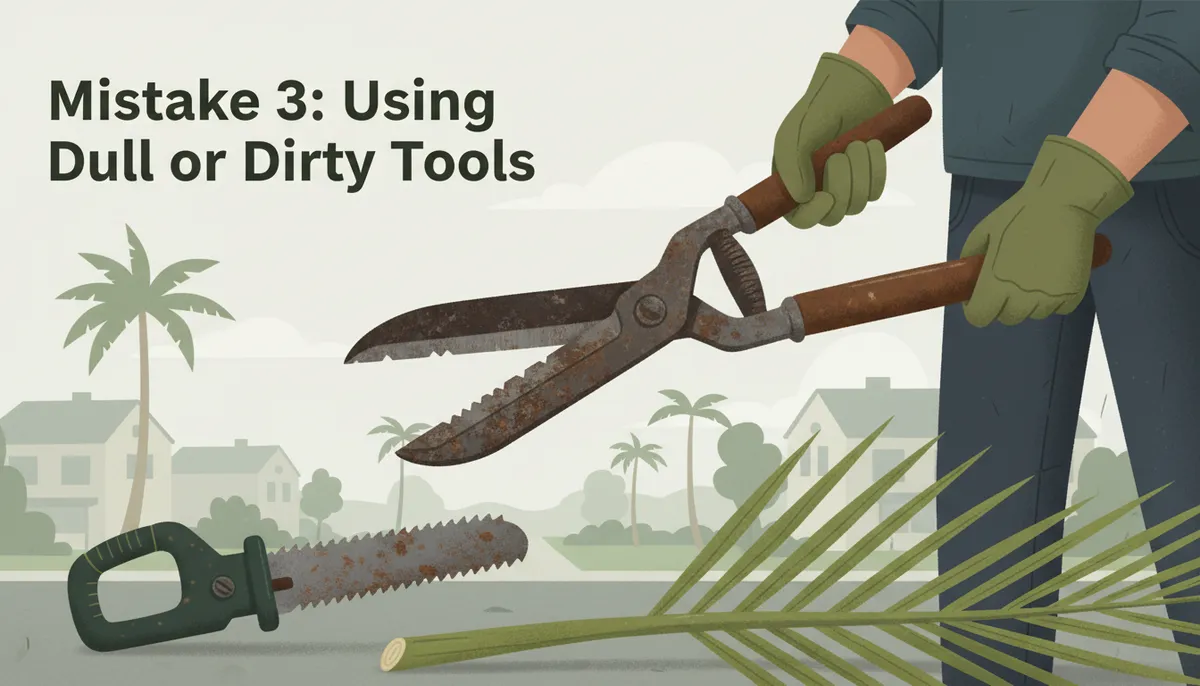
Mistake 3: Using Dull or Dirty Tools
Cutting with dull blades tears the frond instead of making a clean cut. Torn tissue takes much longer to heal and invites infection. Dirty tools are just as dangerous — they can spread fungal diseases from one tree to another. This is a simple but often overlooked mistake.
Proper Tool Maintenance Checklist
- Sharpen blades before every trimming session
- Clean tools with a disinfectant solution between each tree
- Use pruning saws for larger fronds and hand pruners for smaller ones
- Inspect tools for rust or damage before use
- Store tools properly to prevent corrosion
Mistake 4: Ignoring Debris Cleanup After Trimming
Trimmed fronds and palm debris don’t just disappear on their own. Leaving piles of dead fronds on your property creates a habitat for pests like rats and insects. It also creates a fire risk during dry spells and makes your yard look neglected. Cleanup is a critical part of any proper trimming job.
This is where professional junk removal in Brandon becomes essential. After trimming, the debris needs to be collected and hauled away efficiently. Many homeowners are surprised by how much material even one palm tree produces. For larger properties or multiple trees, junk hauling services save significant time and effort.
What Palm Trimming Debris Typically Includes
- Dead fronds (can be long and heavy)
- Seed pods and flower stalks
- Loose bark and trunk fibers
- Boot remnants (old frond bases still attached to trunk)
- Fallen coconuts or seed clusters
Mistake 5: Skipping Safety Precautions
Palm tree trimming is physically demanding and potentially dangerous. Working at height with sharp tools near power lines or structures is not a task to take lightly. Many DIY accidents happen because homeowners underestimate the risks involved. Falls, cuts, and debris injuries are all real hazards.
Common Safety Oversights
- Working too close to overhead power lines
- Using an unstable or undersized ladder
- Failing to wear protective gloves, eyewear, and hard hats
- Not having a spotter or helper nearby
- Allowing others to stand beneath the tree while cutting
For tall palms especially, hiring a certified professional is the safest option. They bring the right equipment, experience, and insurance coverage. You can reach out to our team for a safe and professional assessment of your property’s trees.
Mistake 6: Cutting Fronds Too Close to the Trunk
Many homeowners try to trim as close to the trunk as possible for a neat appearance. However, cutting too close can damage the trunk tissue and leave open wounds that never fully heal. This creates permanent scarring and weakens the structural integrity of the tree over time.
Correct Cutting Distance Guide
| Frond Type | Recommended Cut Distance | Risk of Cutting Too Close |
|---|---|---|
| Dead brown fronds | 2–4 inches from trunk | Trunk scarring and decay |
| Green fronds (if needed) | 4–6 inches from trunk | Nutrient loss, stress |
| Flower/seed stalks | At base of stalk | Minimal risk if cut cleanly |
Mistake 7: Neglecting Regular Maintenance Schedules
Palm trees don’t need trimming every month, but neglecting them for years is equally problematic. Over time, dead fronds accumulate, creating weight stress on the canopy. Overgrown palms also become home to pests and can pose wind-sail risks during storms. Establishing a regular trimming schedule keeps trees healthy and your property safe.
Recommended Trimming Frequency by Palm Type
| Palm Type | Recommended Frequency | Notes |
|---|---|---|
| Queen Palm | 2–3 times per year | Fast-growing, heavy frond drop |
| Sabal/Cabbage Palm | Once per year | Florida’s state tree; lower maintenance |
| Windmill Palm | Once per year | Slower growing, minimal trimming needed |
| Foxtail Palm | 1–2 times per year | Self-cleaning but benefits from maintenance |
If you manage multiple properties or a rental portfolio, setting a recurring schedule with a trusted landscaping provider ensures nothing falls through the cracks. This also protects your investment and keeps curb appeal strong throughout the year.
What to Look for in a Palm Tree Trimming Professional
Not all tree service companies are equal. Before hiring anyone, it pays to do your research and ask the right questions. Look for companies with proven experience, proper licensing, and comprehensive services that include debris removal after the job is done.
Key Qualities to Evaluate
- Licensing and insurance — Always verify that the company holds proper licensing
- Experience with palms specifically — Palm care differs from standard tree trimming
- Debris cleanup included — Confirm that post-trimming cleanup is part of the service
- Transparent pricing — Request a detailed estimate before any work begins
- Customer reviews — Check online platforms for honest feedback from past clients
You can review client feedback and explore service options by visiting our customer reviews page or checking our Google Business Profile to see what our customers say. You can also find us on Thumbtack for additional verified reviews and service details.
How Palm Trimming and Junk Removal Work Together
One often-overlooked aspect of palm tree care is the cleanup and disposal process. A professional trim produces a significant volume of debris. Without a plan for hauling it away, your yard can look worse than before the work started. Pairing trimming with proper storm debris removal or general junk hauling creates a seamless experience from start to finish.
If your project involves larger-scale work — such as full tree removal, stump grinding, or clearing a property ahead of a renovation — services like down tree removal and demolition cleanup can be coordinated together for maximum efficiency. For seniors downsizing or homeowners clearing large estates, combining these services saves both time and money. You can also visit BluHalo for complementary home service solutions that pair well with outdoor property maintenance.
Understanding the Cost of Professional Palm Trimming
Professional palm tree trimming typically ranges from $100 to $1,500 per tree, depending on factors like tree height, condition, and the complexity of the job. Taller palms require more equipment and time. Trees near power lines or structures also require added care. While DIY might seem like a cost-saving option, the risks and potential damage to the tree often make professional services a smarter investment.
Factors That Affect Trimming Costs
- Tree height and number of fronds to be removed
- Accessibility and proximity to structures or utilities
- Condition of the tree (healthy vs. diseased)
- Whether debris removal and haul-away are included
- Number of trees in the project
Wayne & Sons Landscaping & Junk Removal provides transparent, upfront pricing with no surprise charges. After more than 15 years of serving the Brandon, Florida community and surrounding areas, the team understands exactly what it takes to deliver quality results efficiently and affordably. Explore our full range of landscaping services or browse our project gallery to see our work firsthand.
Final Thoughts on Avoiding Palm Tree Trimming Mistakes
Proper palm tree care protects your investment, improves your property’s appearance, and keeps everyone around you safe. The seven mistakes outlined in this guide are entirely avoidable with the right knowledge and the right team. From trimming technique to debris disposal, every step in the process matters.
Whether you are a busy homeowner, a property manager maintaining multiple units, or a real estate professional preparing a home for market, don’t leave your palm trees to chance. Trust a professional team with the experience and tools to get the job done right the first time. Contact our team today or call us at (813) 452-1570 to schedule your palm tree trimming service and get a transparent, no-obligation estimate.
FAQs
Q: How often should palm trees be trimmed in the Dover and Brandon, Florida area?
A: Most palm species benefit from trimming one to three times per year, depending on the variety and growth rate. Fast-growing palms like Queen Palms may need attention two to three times annually, while slower-growing varieties such as Sabal Palms typically require only one trim per year. A professional assessment can help determine the right schedule for your specific trees.
Q: What is the average cost of professional palm tree trimming?
A: Professional palm tree trimming typically ranges from $100 to $1,500 per tree, depending on factors such as tree height, condition, and accessibility. Trees located near power lines or structures may require additional care and equipment, which can affect the overall cost. Wayne & Sons Landscaping & Junk Removal provides transparent, upfront pricing so there are no surprises on your final bill.
Q: Is debris cleanup included with professional palm tree trimming services?
A: Reputable professional services should include debris removal and haul-away as part of the trimming package. Palm fronds, seed pods, and trunk fibers can create a significant amount of waste that needs to be properly disposed of. Always confirm that cleanup is included before scheduling your service to avoid unexpected additional charges.
Q: Can I trim my palm tree myself, or should I hire a professional?
A: While minor trimming of low-hanging fronds may be manageable for experienced homeowners, trimming tall or mature palms is strongly recommended to be left to certified professionals. Working at height near power lines or structures carries serious safety risks, and improper technique can permanently damage or kill the tree. A licensed professional brings the right tools, training, and insurance to complete the job safely.
Q: What happens if palm trees are trimmed too aggressively?
A: Over-pruning, often called hurricane cutting, strips too many green fronds from the canopy and forces the tree to deplete its stored energy reserves. This can permanently weaken the trunk, make the tree more vulnerable to pests and disease, and even kill it if the practice is repeated over multiple seasons. Only dead, brown, or damaged fronds should be removed during a standard trimming session.