Key Takeaways
-
Yard debris is a big issue: the EPA estimated 35.4 million tons of yard trimmings in 2018, and about 10.53 million tons still went to landfills, so where your debris goes matters.
-
DIY works well for a few bags of leaves or small branch trimmings, but multiple truck trips, sharp branches, and heavy wet green waste make larger or mixed piles better suited to a professional crew.
-
Before booking any hauler, ask whether the quote includes extra fees, whether they are licensed and insured, where the debris will go, and whether they offer composting or recycling.
-
Separate restricted items like pesticides, paint, fuel, propane cylinders, batteries, and asbestos from ordinary yard debris and tell your hauler about them upfront.
-
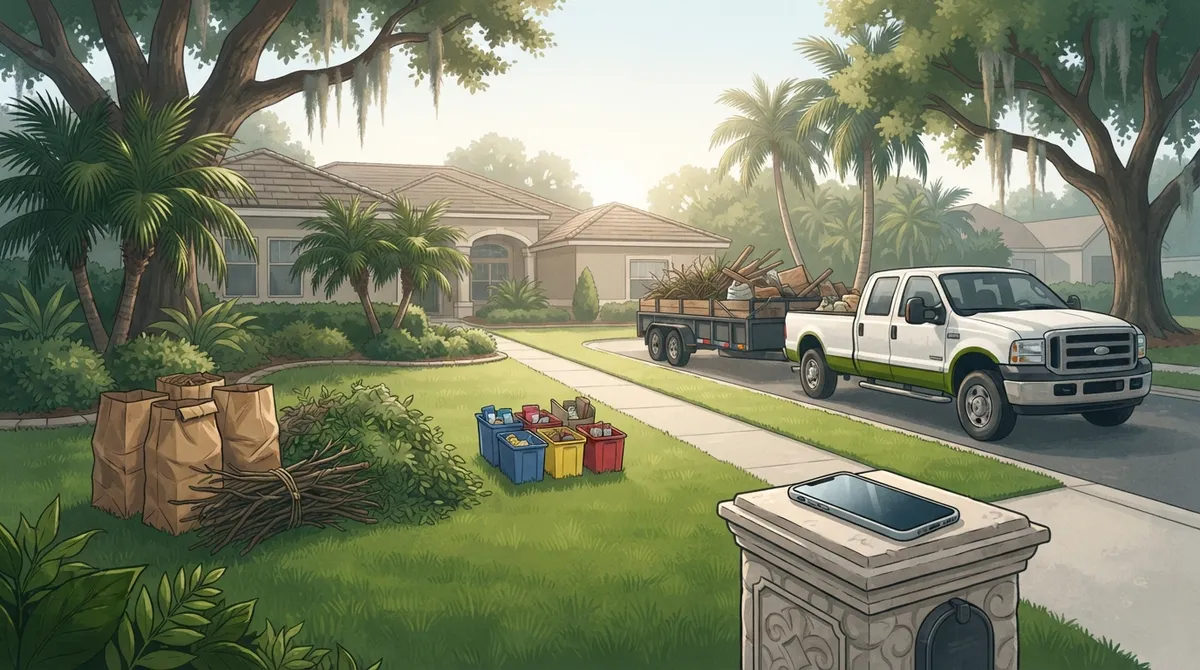
Prepare for pickup by grouping like materials, clearing a path for the crew, and taking a quick photo of the pile to help get an accurate estimate.
-
Never burn or dump debris unless local rules clearly allow it, and check Pasco County or your local waste authority for accepted yard waste and drop-off rules.
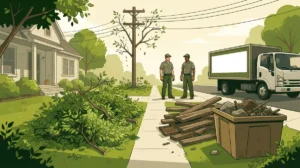
Picture this: it is a warm Saturday in Wesley Chapel, FL. The yard is full of fallen branches, bagged leaves, an old plastic chair, and a pile of scrap wood from last month’s project. You mean to tackle it all. Then the heat kicks in, the truck will not fit it all in one trip, and you wonder if there is a better way.
You are not alone. Trash debris removal is one of those chores that sounds simple until you start. The big question is whether to do it yourself or hire a pro. Both paths work, and each fits different people and different piles.
In this friendly guide, we compare DIY hauling and professional trash debris removal side by side. We cover what counts as debris, where it can legally go, what drives the cost, and how to stay safe. By the end, you will know which route fits your yard, your schedule, and your back.
What Trash Debris Removal Really Means
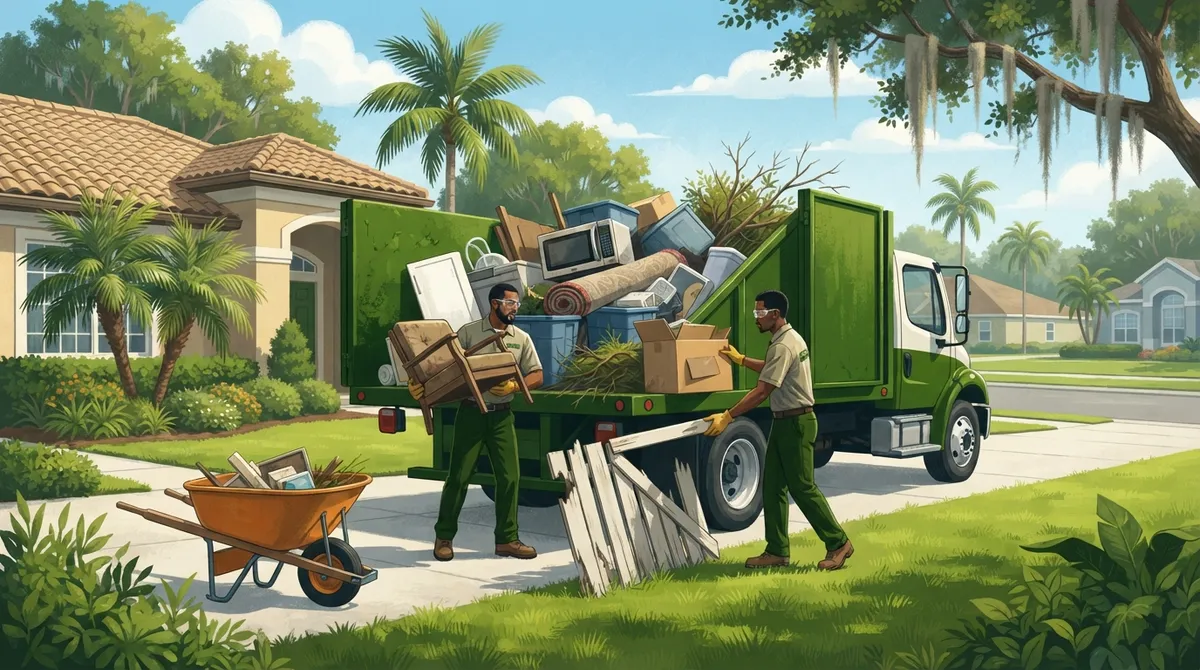
In the landscaping and junk removal world, trash debris removal means collecting, loading, hauling, and properly routing unwanted material from yards, gardens, and outdoor projects. It is more than tossing things in a truck bed. The “routing” part matters, because different materials go to different places.
Common debris types include:
- Green waste: leaves, grass clippings, branches, brush, and palm fronds
- Wood debris: scrap lumber, fence boards, and old deck pieces
- Metal and hard items: scrap metal, broken grills, and discarded outdoor furniture
- Project leftovers: small demolition scraps, old planters, and torn-out materials
If you want a deeper look at the yard side of this topic, our guide on what debris removal really covers for your yard breaks it down nicely.
Why Yard Debris Is a Bigger Deal Than You Think
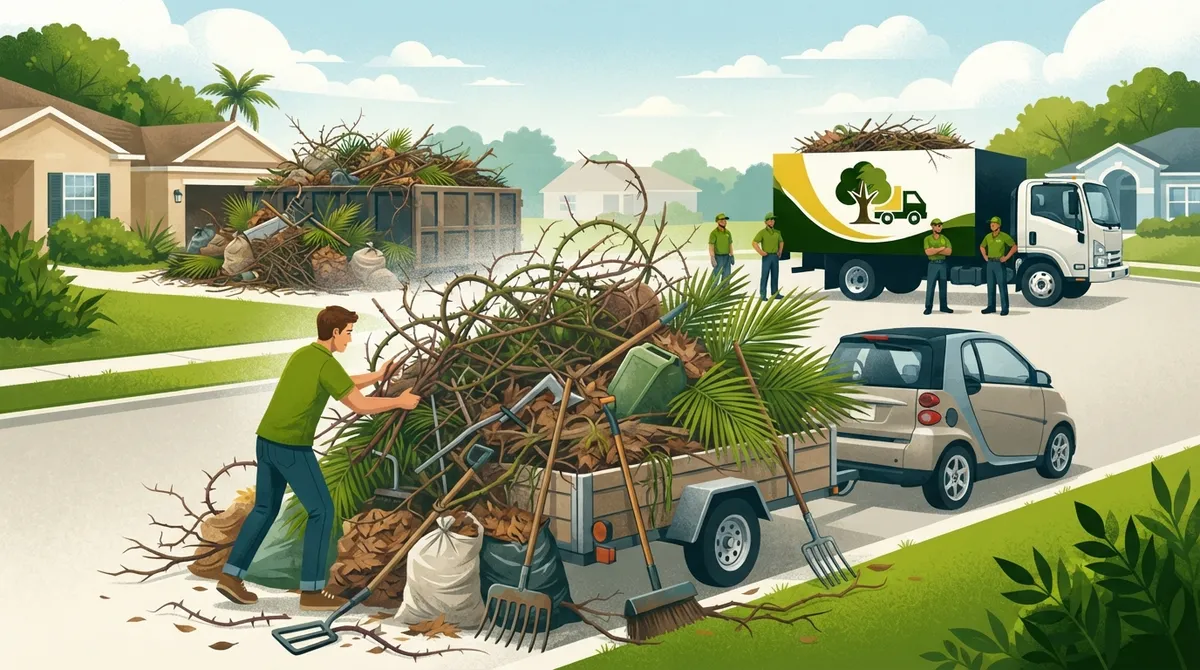
Yard waste adds up fast. The U.S. EPA estimates that 35.4 million tons of yard trimmings were generated in municipal solid waste in 2018. That equals 12.1% of all municipal solid waste. That is a lot of leaves and branches.
Here is the good news. The EPA also estimates that 22.3 million tons of yard trimmings were composted or mulched that year, a 63% rate. Still, about 10.53 million tons ended up in landfills. Those are historical estimates, but they show a simple truth: where your debris goes matters.
Green waste can often become mulch or compost instead of landfill. A thoughtful hauler helps make that happen. If you are curious about what happens after the truck leaves, read where junk removal takes your stuff.
Option One: Doing Trash Debris Removal Yourself
DIY has real charm. You control the schedule, you know your own yard, and a small pile can be a quick win. For a few bags of leaves or a handful of trimmed branches, DIY is often the sensible choice.
The Upsides of DIY
- Low cost for small jobs: You may only pay for bags, gas, and any facility fees.
- Total flexibility: You choose the day and the pace.
- Satisfaction: There is something great about a freshly cleared yard you cleared yourself.
The Hidden Downsides of DIY
DIY gets tricky when piles grow. Branches are sharp and awkward. Wet green waste is heavy. A single truck bed holds less than most people expect, so you may make several trips. Each trip costs time, fuel, and often a facility fee.
There are safety concerns too. DIY handling can involve sharp branches, heavy loads, insects, and powered equipment. Wear sturdy gloves, closed-toe footwear, and eye or hearing protection when needed. Never lift more than you can handle, and follow equipment instructions closely.
Also, please do not burn or dump debris unless local rules clearly allow it. Rules in Wesley Chapel, FL and Pasco County can differ from other areas, so check with your local waste authority first.
Option Two: Hiring a Pro for Trash Debris Removal
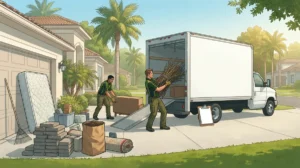
A professional crew brings the truck, the muscle, and the know-how. They load everything, haul it away, and sort materials toward the right destination. For big piles, mixed loads, or busy schedules, this is a huge relief.
That is where Wayne & Sons Landscaping & Junk Removal comes in. With over 15 years of experience, our team handles both the landscaping side and the junk side, so one call can cover trimmed trees, scattered brush, and that old furniture too. We are proud to serve Wesley Chapel, FL and the greater Tampa Bay area with prompt service and upfront estimates.
The Upsides of Hiring a Pro
- Speed: A crew can clear in an hour what might take you a weekend.
- Mixed loads welcome: Green waste, wood, metal, and furniture can go in one visit.
- Proper routing: Organic material can head toward composting or mulching, and recoverable items can be separated for recycling where facilities accept them.
- Less strain: No heavy lifting, no sore back, no sweating through the afternoon.
Questions to Ask Any Hauler
Before you book, it helps to ask a few simple questions. Our article on things to know before getting a junk removal quote covers this in more detail. In short, ask:
- What does the quote include, and are there extra fees?
- Are you licensed and insured?
- Where will my debris go?
- Do you offer composting or recycling options?
- Will you give an estimate before loading?
Side-by-Side: DIY vs. Professional Debris Removal
Sometimes a quick comparison says it all. Here is how the two options stack up for a typical Wesley Chapel, FL yard.
| Factor | DIY Removal | Professional Removal |
|---|---|---|
| Best for | Small piles, light green waste | Large piles, mixed loads, tight schedules |
| Time needed | Several hours to a full weekend | Often one short visit |
| Physical effort | High, with lifting and loading | Minimal for you |
| Equipment | Your own truck, bags, and tools | Crew, truck, and loading gear provided |
| Disposal knowledge | You research local rules | Provider sorts and routes materials |
| Safety risk | Sharp branches, heavy lifting, insects | Handled by trained crew |
| Cost pattern | Fuel, bags, facility fees, your time | Quoted by volume, material, and access |
For a deeper take on this exact choice, check out DIY hauling vs. pro junk removal and pro hauling vs. DIY dump runs in Wesley Chapel, FL.
What Drives the Cost of Debris Removal
We never want surprises, so let’s talk about what shapes the final number. Costs vary by location and by job. Common pricing factors include:
- Volume and weight: Bigger and heavier piles take more truck space and more effort.
- Material type: Green waste, wood, and metal may follow different disposal routes.
- Access: A pile at the curb is easier than one behind a locked gate or down a long path.
- Labor: More lifting and sorting means more crew time.
- Hauling distance and facility fees: Where the debris goes can affect the price.
Some junk removal companies quote by truck space and give an estimate before loading. That is how we like to do it at Wayne & Sons, with clear, upfront estimates and no surprises. To learn more about how pricing styles work, see by load or by item: which junk pricing wins.
Where Does Trash Debris Go After Pickup?
This part surprises many people. A good removal job is not just about hauling. It is about sending each material to the right place.
Green Waste
Leaves, grass, branches, and brush may be accepted through municipal collection, transfer stations, or composting and mulching facilities. Accepted materials, preparation steps, and fees vary by location. Organic debris can often be composted or mulched rather than landfilled.
Wood and Metal
Clean, untreated wood may be suitable for wood recycling or mulch. Metal and some other recoverable materials can be separated for recycling where facilities accept them. For metal-heavy cleanups, our metal junk removal tips may help.
Restricted Items
Some things should never be mixed with ordinary yard debris. Examples that commonly need separate handling include pesticides, chemicals, paint, fuel, propane cylinders, asbestos, batteries, and medical waste. Confirm requirements with your local waste authority or a qualified provider. Be upfront with any hauler about restricted items so nothing gets mixed in by mistake.
How to Prepare for a Debris Pickup in Wesley Chapel, FL
A little prep makes pickup day smooth for everyone. Here is a simple routine to follow.
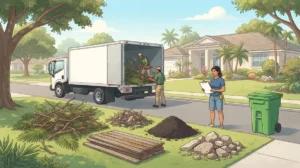
- Walk the yard. Note what you have, such as branches, bags, scrap wood, or old furniture.
- Group like materials. Stack branches together and bag loose leaves if you can.
- Set aside restricted items. Keep chemicals, paint, fuel, and batteries separate and tell your hauler.
- Clear a path. Move cars, open gates, and make sure the crew can reach the pile.
- Estimate the pile size. A quick photo helps with an accurate quote.
Many of our customers ask if they need to be home. Our post on whether you need to be home for junk removal explains how that usually works.
Who Benefits Most From Professional Help?
Different people have different needs, and that is perfectly normal. Here is who often finds a pro to be the smarter pick in Wesley Chapel, FL:
- Busy homeowners: Weekends are precious. A crew gives you time back.
- Real estate agents and property managers: Fast cleanup helps listings and rentals look their best.
- Contractors and renovators: Construction scraps pile up quickly, and a dependable haul-away keeps job sites tidy. See dumpster vs. junk crew for construction debris.
- Seniors and downsizers: Heavy lifting is not worth the strain. A friendly crew handles it all.
- Small business owners: A clean, welcoming exterior helps customers feel at ease.
If you are weighing a dumpster as another choice, our comparison of junk removal vs. dumpster rental is a handy read.
When DIY Makes Sense and When It Does Not
Let’s be honest. You do not always need a pro. If you have a few bags of leaves and some small twigs, a quick DIY run is perfectly fine. Check local rules for accepted yard waste and drop-off sites, and you are set.
It is time to call a pro when:
- The pile is bigger than your truck can carry in one trip
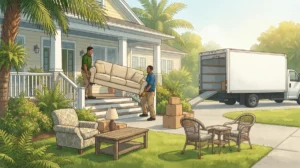
- You have mixed materials like wood, metal, and furniture
- There are heavy or awkward items you cannot lift safely
- You are short on time or recovering from a storm
- You are not sure what is allowed at local facilities
After a big storm, piles of limbs can appear overnight. In that case, a crew can save you hours of hard work. For storm cleanup guidance, see our smart steps for storm debris removal.
Why Wayne & Sons Is a Great Fit for Wesley Chapel, FL
When you need trash debris removal in Wesley Chapel, FL, you want someone who shows up, works hard, and treats your property with respect. That is how we operate. We combine landscaping know-how with full junk removal, so we understand yard debris from both sides.
Here is what you can expect from Wayne & Sons:
- Effortless convenience: Prompt, hassle-free service from start to finish.
- Transparent pricing: Detailed upfront estimates with no surprises, and very affordable rates.
- Exceptional customer service: Satisfaction guaranteed.
- One-stop help: Tree trimming, shrub care, palm maintenance, lawn care, and junk hauling under one roof.
Curious what neighbors think? You can visit us on Google — Wayne & Sons Landscaping & Junk Removal to read real customer feedback. You can also find us on Thumbtack.
A Quick Word on Our Roots
Our home base is in Brandon, Florida, and our crews serve neighborhoods across the Tampa Bay region, including Wesley Chapel, FL. Over the years, we have seen every kind of yard challenge, from overgrown hedges to piles left after a big renovation. That experience helps us give honest advice, even when the answer is a simple DIY run.
Keeping your lawn tidy after the debris is gone is easy too. A well-kept lawn helps prevent future clutter, and a good lawn mower routine keeps grass clippings manageable. If you want help with regular upkeep, see our guide on what landscape maintenance really includes.
Final Verdict: Which Wins for Trash Debris Removal?
So, who wins? It depends on your pile. DIY wins for small, light jobs where you enjoy the work and have time. Professional removal wins for large piles, mixed materials, tight schedules, and anyone who values safety and peace of mind.
Whichever path you choose, remember the basics. Know your materials, keep restricted items separate, follow local rules, and never burn or dump without permission. A clean yard feels wonderful, and you deserve to enjoy it.
Ready to reclaim your yard in Wesley Chapel, FL? Contact us for a friendly, upfront estimate, or call us or text us at 813-452-1570. We would love to help you get that pile gone and your weekend back.
FAQs
Q: What does trash debris removal include?
A: Trash debris removal covers collecting, loading, hauling, and properly routing unwanted outdoor material. That includes leaves, grass clippings, branches, brush, scrap wood, metal, and old outdoor furniture. A good provider also sorts materials toward composting, mulching, or recycling where facilities accept them.
Q: How much does yard debris removal cost?
A: Costs vary by job and location. The biggest factors are the volume and weight of the debris, the material type, how easy the pile is to reach, labor, and disposal fees. Wayne & Sons gives a clear upfront estimate before loading, so you always know what to expect.
Q: What items are not accepted in regular yard debris removal?
A: Hazardous or restricted items should never be mixed with ordinary yard waste. Examples include pesticides, chemicals, paint, fuel, propane cylinders, asbestos, batteries, and medical waste. Check with your local waste authority or a qualified provider, and always tell your hauler about these items up front.
Q: Can branches, leaves, and grass clippings be composted or mulched?
A: Yes, organic yard debris can often be composted or mulched instead of sent to a landfill. Clean, untreated wood may also work for wood recycling or mulch. Accepted materials and preparation steps vary by facility, so it helps to ask your hauler where your debris will go.
Q: How should I prepare for a yard debris pickup?
A: Walk your yard, group similar materials together, and set aside any restricted items. Clear a path so the crew can reach the pile, and snap a quick photo to help with your quote. A little prep keeps pickup fast and friendly.
Our Service Area