Key Takeaways
-
Neglected hedges lose 40% density in two growing seasons, but Seffner's year-round warm climate makes regular trimming critical to prevent interior dieback, fungal disease, and pest infestations caused by high humidity.
-
Professional hedge trimming typically costs less long-term than DIY when factoring equipment ($150-400+), time (3-6 hours vs 1-2 hours), and costly mistakes that permanently damage plants.
-
Well-maintained hedges add 5-15% to perceived home value and reduce days on market by signaling proper property care, making professional trimming essential for sellers and property managers.
-
Seffner's most common hedges require different annual trimming schedules: Viburnum and Ligustrum need 3-4 trims yearly, while Podocarpus needs only 2-3, requiring species-specific maintenance plans.
-
Spring trimming (March-April) is critical for directing new growth, followed by maintenance trims in May-June and September-October; winter trims (December-January) allow aggressive structural work when growth slows.
-
Choose contractors with specific experience in your hedge species, proof of insurance (License #G21000055178), written estimates, included debris removal, and local knowledge of Florida's growing seasons.
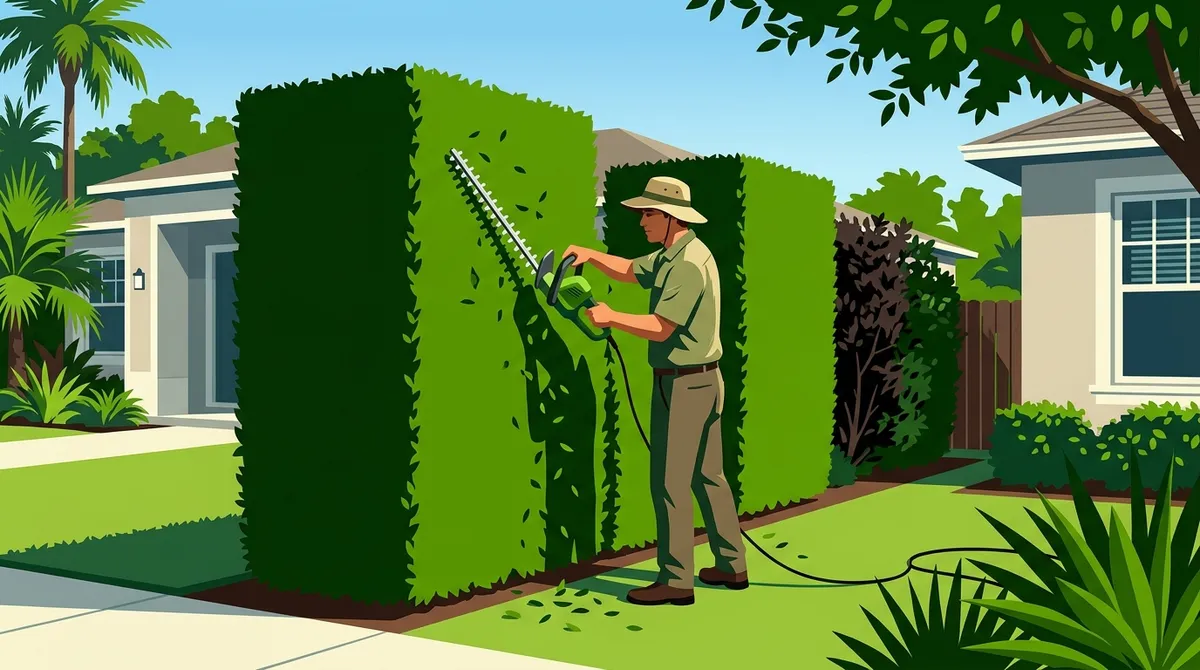
A neglected hedge can lose 40% of its density in just two growing seasons, but Seffner’s year-round growing climate makes proper trimming schedules even more critical than in northern states. Many homeowners underestimate how quickly Florida’s heat and humidity accelerate shrub growth—and how fast an overgrown hedge can go from manageable to a major problem. Professional hedge trimming in Seffner isn’t just about keeping your yard looking neat. It’s a strategic investment in plant health, property value, and long-term curb appeal.
Whether you’re a busy homeowner, a property manager maintaining rental units, or a real estate agent staging a home for sale, the condition of your hedges sends a powerful first impression. Overgrown, patchy, or poorly shaped shrubs can subtract thousands from a home’s perceived value. In contrast, clean, well-maintained hedges signal care, pride, and attention to detail. This article breaks down why professional hedge trimming matters in Seffner, what the science says about plant health, and how to choose the right service provider for your property.
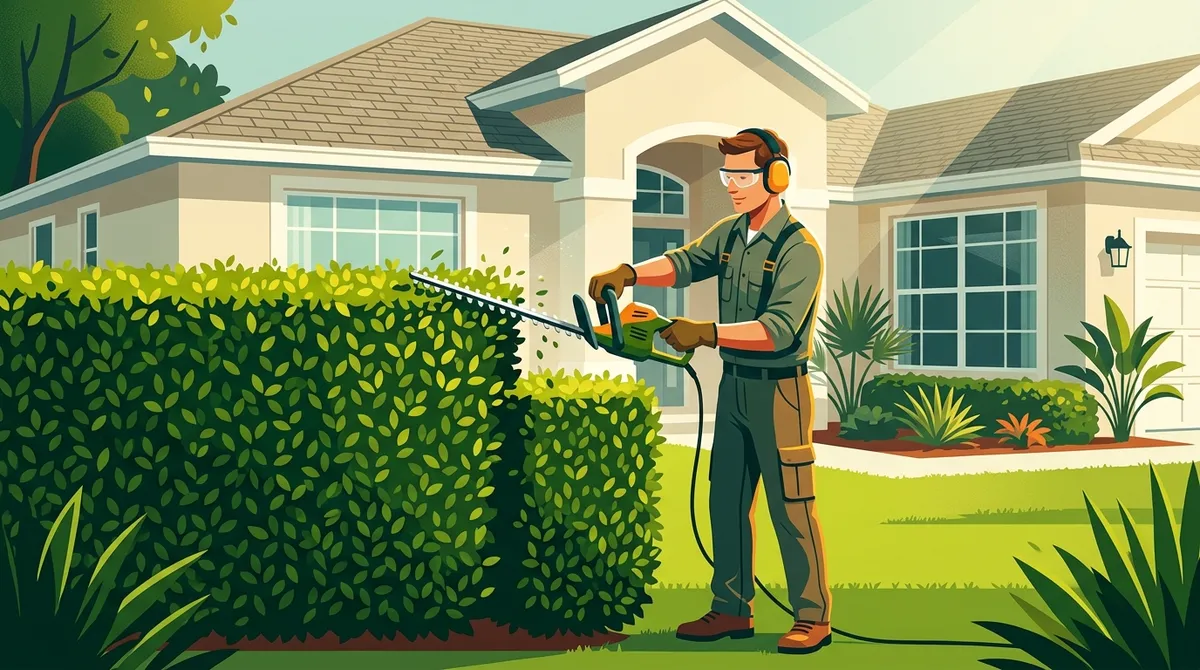
The Hidden Science Behind Hedge Health in Seffner’s Climate
Seffner sits firmly within USDA Hardiness Zone 9b, which means warm temperatures year-round and a long growing season that most northern states simply don’t experience. This climate creates unique challenges for hedge maintenance. Florida’s high humidity encourages rapid growth—but it also creates ideal conditions for fungal disease, pest infestations, and interior dieback if hedges are not trimmed consistently.
How Florida’s humidity affects hedge growth patterns: High moisture levels cause hedges to push out new growth faster than in drier climates. This accelerated growth can cause outer branches to shade interior stems, cutting off sunlight and airflow. Without regular trimming, the interior of a hedge begins to die, leaving a hollow shell that looks full on the outside but is structurally weak underneath.
Why untrimmed hedges develop dead zones: When a hedge is left untrimmed for one or more growing seasons, inner branches stop receiving adequate light. These branches die and become breeding grounds for insects and disease. Once dead zones form, recovery is difficult and sometimes impossible without severe cutbacks.
The connection between trimming frequency and root health: Regular trimming stimulates root development by encouraging the plant to redistribute energy. A properly trimmed hedge develops a stronger, deeper root system, which improves drought tolerance and overall resilience.
- Zone 9b plants grow actively for 10-11 months per year
- High humidity accelerates fungal spread in dense, unclipped hedges
- Interior dieback is the most common consequence of skipped trims
- Root strength improves with consistent above-ground pruning
Species-specific growth rates in Zone 9b: Not all hedges grow at the same pace. Viburnum, Ligustrum, and Podocarpus each respond differently to Seffner’s climate. Understanding your hedge’s specific growth rate is essential to creating an effective maintenance schedule. You can explore more about shrub care services in Brandon to see how species-specific approaches make a difference.
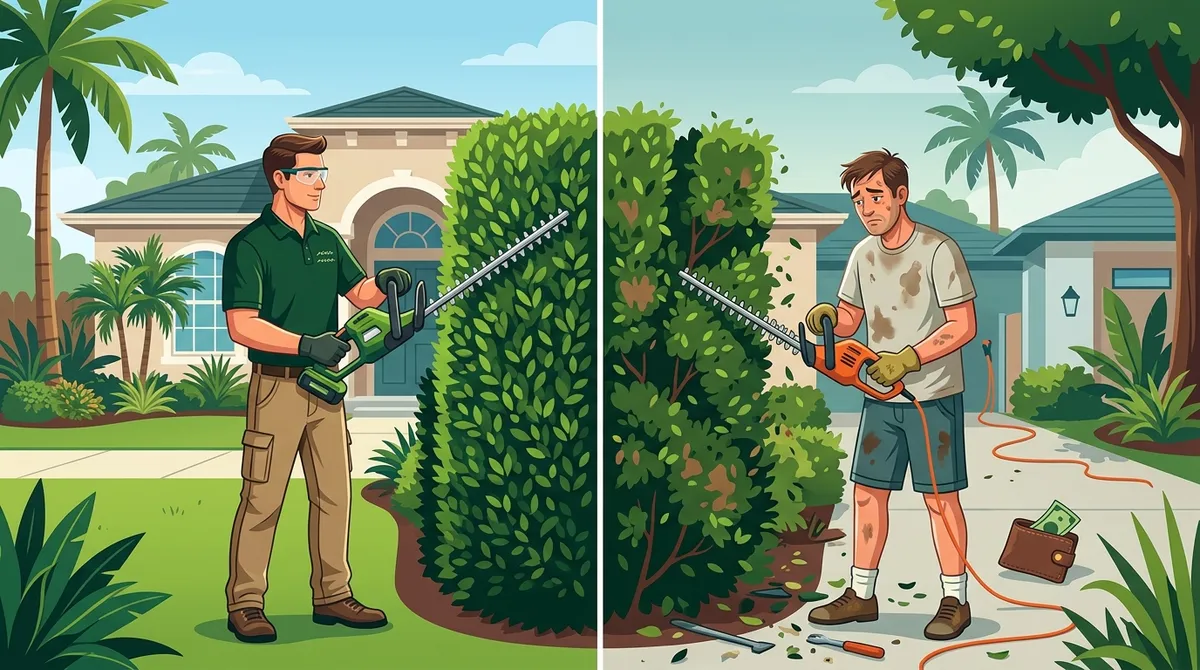
Professional vs DIY: The Real Cost Difference in Seffner
Many homeowners assume that trimming their own hedges saves money. In reality, the true cost of DIY hedge maintenance is often higher than expected when you factor in equipment, time, and the risk of costly mistakes.
Equipment costs for proper hedge maintenance: Quality hedge trimmers, extension poles, safety gear, and debris cleanup tools represent a significant upfront investment. Commercial-grade equipment—the kind professionals use—can cost several hundred dollars or more. Homeowners who purchase lower-quality tools often end up with uneven cuts and damaged plant tissue.
| Cost Category | DIY Approach | Professional Service |
|---|---|---|
| Equipment Purchase | $150–$400+ upfront | Included in service |
| Time Per Session | 3–6 hours | 1–2 hours |
| Debris Disposal | DIY hauling or fees | Typically included |
| Risk of Plant Damage | High (common mistakes) | Low (trained specialists) |
Time investment for average Seffner property: A typical residential property with 50–100 linear feet of hedging can take an untrained homeowner an entire afternoon. Professionals complete the same job in a fraction of the time using commercial equipment and practiced technique.
Common DIY mistakes that damage hedges permanently:
- Cutting too deep into old wood, causing irreversible dieback
- Trimming during the wrong season, which stresses plants
- Using dull blades that tear rather than cut plant tissue
- Failing to remove debris, which promotes disease and pests
Long-term savings from professional maintenance: Consistent professional trimming extends the lifespan of your hedges significantly. Replacing a mature hedge row can cost thousands of dollars in new plants plus installation. Preventive maintenance is always more affordable than full replacement. Explore comprehensive landscaping services that bundle hedge trimming with other regular maintenance tasks for maximum value.
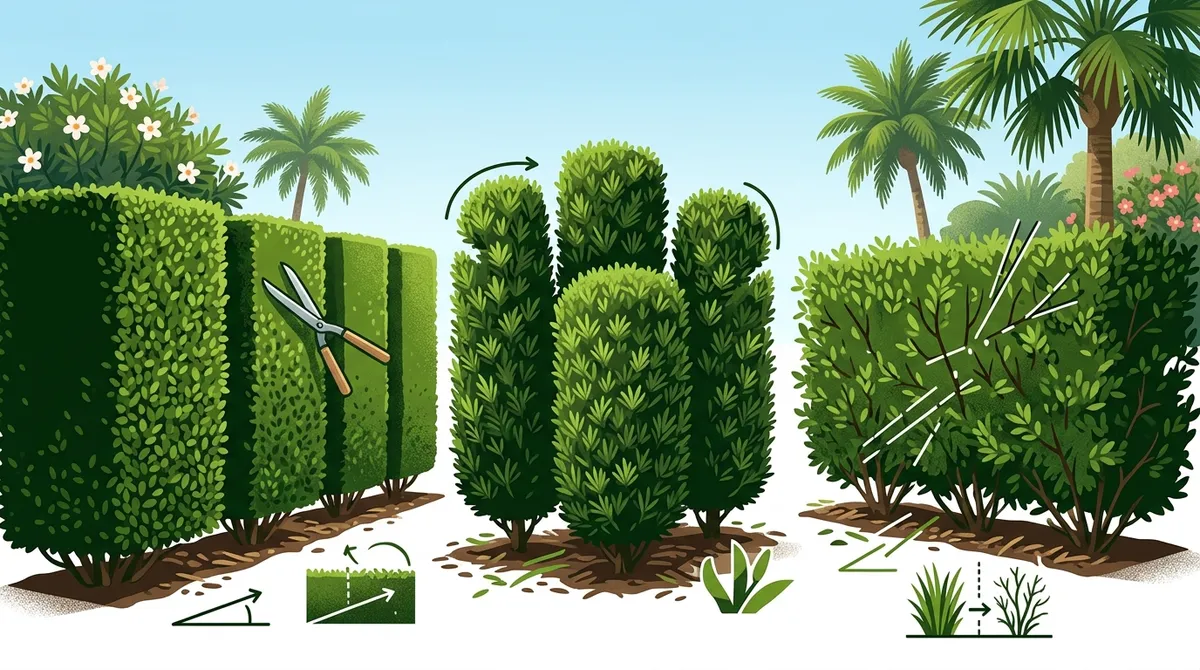
Seffner’s Most Popular Hedge Types and Their Trimming Needs
Seffner homeowners work with a wide variety of hedge species, each requiring a tailored approach to trimming frequency and technique. Understanding your hedge type is the first step toward a proper maintenance schedule.
| Hedge Species | Annual Trims Needed | Growth Rate | Notes |
|---|---|---|---|
| Viburnum | 3–4 | Moderate-Fast | Needs shaping to maintain density |
| Podocarpus | 2–3 | Slow-Moderate | Responds well to formal shaping |
| Ligustrum | 3–4 | Fast | Aggressive grower; needs regular control |
| Clusia | 2–3 | Moderate | Excellent privacy hedge; low maintenance |
| Walter’s Viburnum | 3 | Moderate | Native Florida option; drought tolerant |
Viburnum hedges and their 3-4 annual trims: Viburnum is one of the most commonly planted hedge species in Seffner. It grows quickly in Zone 9b’s warm climate and requires trimming three to four times annually to maintain a clean, dense appearance. Without regular trimming, Viburnum becomes leggy and loses its formal shape. You can learn more about professional hedge services in Brandon that include Viburnum-specific care.
Podocarpus maintenance schedules: Podocarpus is a slower-growing species that tolerates formal shaping exceptionally well. It typically needs trimming two to three times per year and responds well to precision cuts that maintain its elegant, columnar form.
Ligustrum shaping techniques: Ligustrum is a fast grower that can quickly exceed its boundaries if not trimmed consistently. Professionals use layering techniques to encourage outward density rather than excessive vertical growth.
Native Florida hedge options: Walter’s Viburnum and Firebush are native alternatives that offer low-maintenance beauty while supporting local wildlife. Native species often require fewer trims and less water once established, making them an excellent long-term choice for Seffner homeowners.
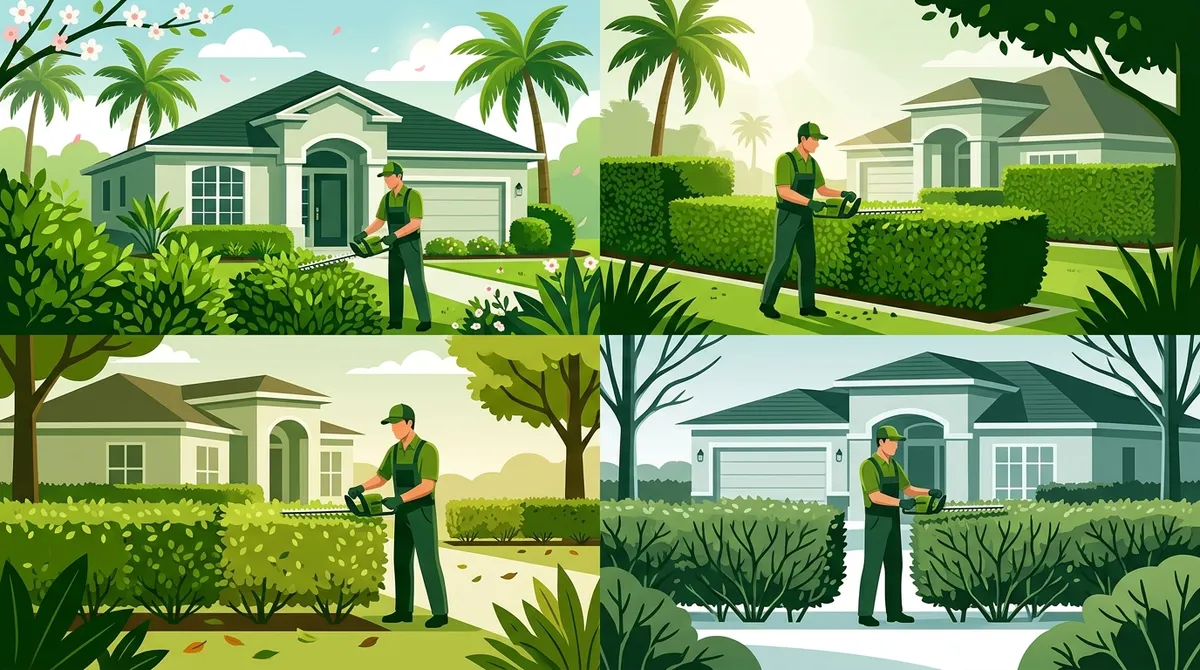
The Four-Season Trimming Schedule for Seffner Properties
Even though Florida doesn’t experience the dramatic seasonal changes of northern states, Seffner’s climate still follows predictable patterns that should guide your hedge trimming schedule. Timing trims correctly maximizes plant health and minimizes stress.
Spring shaping for new growth direction: Spring is the most important trimming season. New growth emerges rapidly after winter, and this is the ideal time to shape hedges in the direction you want them to grow. Spring trims establish the form that will carry through the rest of the year. Missing this window often means playing catch-up all summer long.
- March–April: Perform the primary shaping trim to direct new growth
- May–June: Light maintenance trim to sustain summer appearance
- September–October: Fall trim to reduce bulk before the dry season
- December–January: Light structural trim to address winter growth
Summer maintenance during peak growing: Summer in Seffner brings intense heat and frequent afternoon thunderstorms, creating near-perfect conditions for rapid hedge growth. A maintenance trim in May or June keeps hedges looking tidy and prevents them from encroaching on walkways, driveways, or neighboring properties.
Fall preparation for dormant season: While Florida hedges don’t fully go dormant, growth does slow in the fall. A trim in September or October reduces the volume of foliage before the dry season and removes any summer damage caused by storms or pests. This also prepares the plant structure for cleaner winter growth.
Winter structural trimming opportunities: Cooler temperatures in December and January slow growth considerably. This is an ideal time for more aggressive structural trimming because the plant is under less stress. Winter trims can address deep shaping without triggering excessive regrowth that warm temperatures would otherwise stimulate. Palm tree trimming follows a similar seasonal logic and is often scheduled alongside hedge maintenance for efficiency.
How Professional Trimming Increases Property Value
Landscaping has a measurable impact on property values, and hedges play a significant role in that equation. Well-maintained hedges signal a cared-for property and contribute directly to curb appeal—one of the most influential factors in a buyer’s first impression.
Curb appeal impact on home valuations: Studies consistently show that strong curb appeal can add 5–15% to a home’s perceived value. Hedges that are neatly trimmed and properly shaped frame the property, define boundaries, and create a polished, finished look that attracts buyers and commands higher offers.
Real estate agent perspectives on landscaping: Real estate professionals who serve the Brandon, Florida area consistently report that well-maintained landscaping reduces days on market. Buyers form emotional impressions within seconds of arriving at a property. Neat hedges and clean lawn edges signal that the home has been well cared for inside and out.
- Trimmed hedges define property boundaries and improve visual structure
- Healthy, dense hedges provide privacy—a high-value feature for buyers
- Overgrown hedges can raise concerns about deferred maintenance
- Professional landscaping photos improve online listing performance
Before-and-after value differences: Properties staged with professional landscaping—including hedge trimming—consistently outperform comparable homes without it. The cost of a seasonal trimming schedule is minimal compared to the return at the point of sale.
ROI on professional landscape maintenance: For property managers maintaining rental units, consistently trimmed hedges reduce tenant turnover by improving the visual appeal of the property. A well-kept exterior attracts higher-quality tenants and justifies competitive rental pricing. You can read our customer reviews to see how our clients have benefited from consistent landscaping maintenance.
Choosing the Right Hedge Trimming Service in Seffner
With over 22 shrub maintenance service providers listed near Seffner on the Better Business Bureau, selecting the right contractor requires careful evaluation. Not all landscaping services deliver the same level of expertise, reliability, or value.
Essential questions to ask contractors:
- Do you have experience with my specific hedge species?
- Will you provide a written estimate before starting work?
- Do you include debris cleanup and haul-away in your pricing?
- How do you determine the correct trimming depth for each species?
- Can you provide references or before-and-after photos of similar properties?
These questions help you assess whether a contractor brings real expertise to the job or simply offers low prices without the knowledge to back them up. You can also check platforms like Thumbtack to review verified contractor profiles and customer feedback before making a hiring decision.
Insurance and licensing requirements: Any reputable hedge trimming service in Seffner should carry general liability insurance and, where applicable, proper licensing. This protects you as the property owner if damage occurs during the job. Always request proof of insurance before work begins. Wayne & Sons Landscaping & Junk Removal (License #: G21000055178) carries proper credentials and has proudly served the Seffner and greater Tampa Bay area for over 15 years.
Bundling options with lawn care: Many homeowners find the best value by bundling hedge trimming with regular lawn mowing, edging, and debris removal. Bundled packages typically offer cost savings and the convenience of a single service provider managing your entire landscape. This is especially valuable for busy professionals and property managers who want consistent results without coordinating multiple contractors. Visit our landscaping services page to explore bundling options tailored for Seffner properties.
Red flags to avoid when hiring:
- No written estimate or vague pricing structure
- Inability to explain species-specific trimming techniques
- No proof of insurance or licensing when requested
- Pressure to pay in full before work begins
- No debris removal included in the quoted service
- Unfamiliar with Florida-specific growing seasons and climate considerations
Choosing a local, experienced provider means working with someone who understands Seffner’s unique growing conditions, common hedge species, and seasonal patterns. Local knowledge translates directly into better results for your property. You can also explore our project gallery to see examples of professionally trimmed hedges and landscaping work completed across the area.
For storm-related cleanup that follows heavy trimming seasons, our team also handles storm debris removal to keep your property safe and clean year-round. If your landscaping project involves larger clearing work, our down tree removal services are available to complement any major landscape renovation.
To verify our reputation and read what local homeowners are saying, visit us on Google and check our reviews from satisfied customers across Seffner, Brandon, and the surrounding Tampa Bay area.
Conclusion
Professional hedge trimming in Seffner is far more than a cosmetic service. It’s a scientifically grounded practice that protects plant health, enhances property value, and keeps your landscape looking its best in one of Florida’s most demanding climates. From species-specific trimming schedules to seasonal timing and professional expertise, the right approach to hedge care pays dividends in curb appeal, plant longevity, and home valuation.
Whether you manage a single family home, a rental portfolio, or a commercial property in Seffner, consistent professional trimming is the most cost-effective way to protect your landscape investment. Don’t wait until your hedges are overgrown and difficult to recover—start a proper maintenance schedule today.
Ready to transform your Seffner property with expert hedge trimming? Contact our team at Wayne & Sons Landscaping & Junk Removal for a free, transparent estimate—or call us directly at (813) 452-1570 to schedule your first service. We’re proud to serve Seffner and the greater Tampa Bay area with over 15 years of professional landscaping experience.
FAQs
Q: How much does professional hedge trimming typically cost per linear foot in Seffner?
A: Professional hedge trimming costs in Seffner vary based on hedge height, species, and the amount of overgrowth present. Wayne & Sons Landscaping & Junk Removal offers transparent, upfront estimates with no hidden fees—contact us directly for a free quote tailored to your specific property.
Q: Can hedge trimming be done during Florida’s rainy season without damage?
A: Yes, hedge trimming can be performed during Florida’s rainy season with proper technique and timing. Experienced professionals schedule trims between rain events and avoid cutting immediately before or after heavy rain, which helps reduce the risk of fungal infection in freshly cut plant tissue.
Q: What’s the best month to start a hedge trimming schedule in Seffner?
A: March or April is the ideal time to begin a hedge trimming schedule in Seffner. This spring window captures the start of active new growth, allowing professionals to shape hedges in the desired direction before the fast-paced summer growing season takes hold.
Q: How do I know if my hedges are too overgrown for trimming versus replacement?
A: Hedges with significant interior dieback, hollow centers, or structural damage from years of neglect may require partial or full replacement rather than trimming alone. A professional assessment from a licensed landscaper is the most reliable way to determine whether recovery trimming or replanting is the better long-term solution.
Q: Should hedge trimming include root pruning in Florida’s sandy soil?
A: Root pruning is generally not required as part of routine hedge trimming in Seffner’s sandy soil conditions. However, if a hedge has become invasive or is competing aggressively with nearby plants or structures, a professional landscaper can evaluate whether targeted root pruning is appropriate for your specific species and site.