Key Takeaways
-
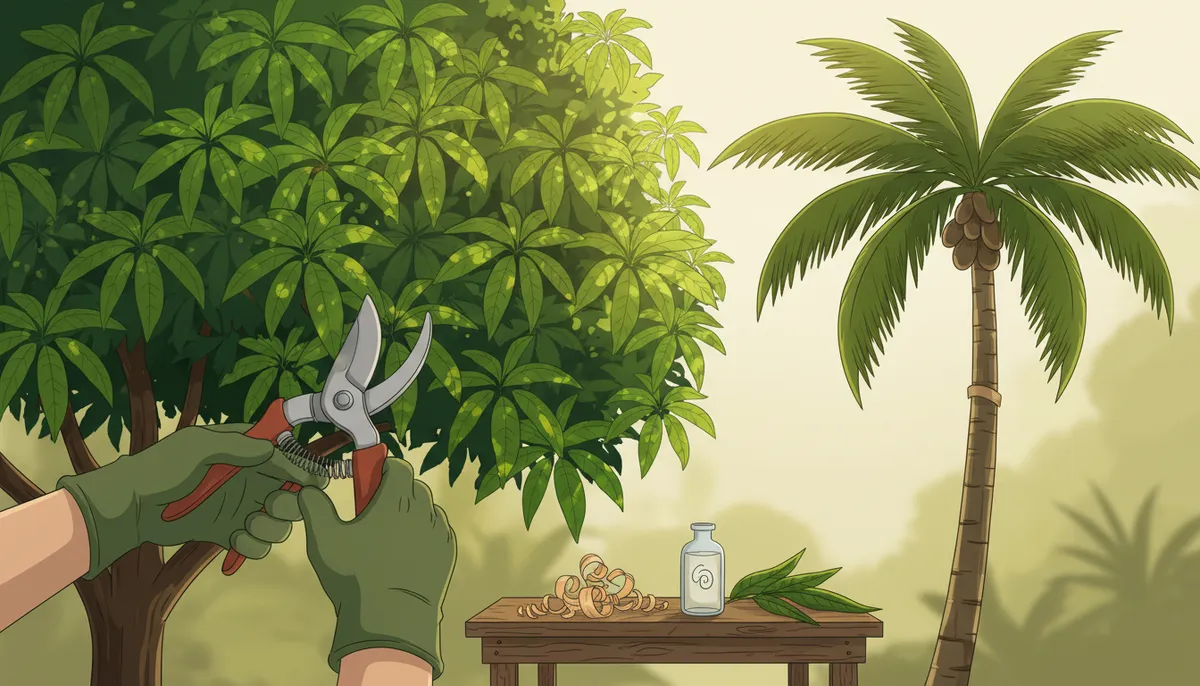
Prune mango trees immediately after harvest (by end of December or August) to allow time for new growth and flower bud development; pruning outside this window delays fruiting by an entire cycle.
-
Use the 9-to-3 rule for palm trees: remove only fronds hanging below the horizontal line; never over-trim or remove healthy green fronds, as this weakens trees and increases pest vulnerability.
-
Never remove more than 25-30% of a mango tree’s canopy in one session, as heavy pruning can delay fruit production for 2-3 years; focus on thinning cuts rather than aggressive heading cuts.
-
Always leave at least 2 inches of frond base attached to palm trunks when cutting; cutting too close damages the protective layer and creates disease entry points.
-
Use sharp, clean tools and disinfect between cuts with 70% isopropyl alcohol to prevent disease spread; in Florida, hire only licensed and insured tree trimmers to avoid fines and liability.
-
Plan for debris removal before trimming begins; professional junk hauling services efficiently handle the large volume of bulky fronds and branches generated by major trimming sessions.
If you own a home in Brandon, Florida, chances are you have at least one palm tree or mango tree in your yard. These tropical beauties add real value to your property. But without proper care, they can become safety hazards, eyesores, or simply stop producing fruit altogether.
Palm tree trimming and mango tree pruning are not the same thing. Each tree has its own needs, timing, and technique. Getting it wrong can damage the tree for years — or even kill it. Getting it right keeps your landscape looking sharp, your trees healthy, and your property safe.
Whether you are a homeowner trying to maintain curb appeal, a property manager keeping rental units attractive, or a real estate professional prepping a home for sale, this guide gives you ten practical tips to do it right. Let’s get into it.
Why Proper Tree Trimming Matters in Florida
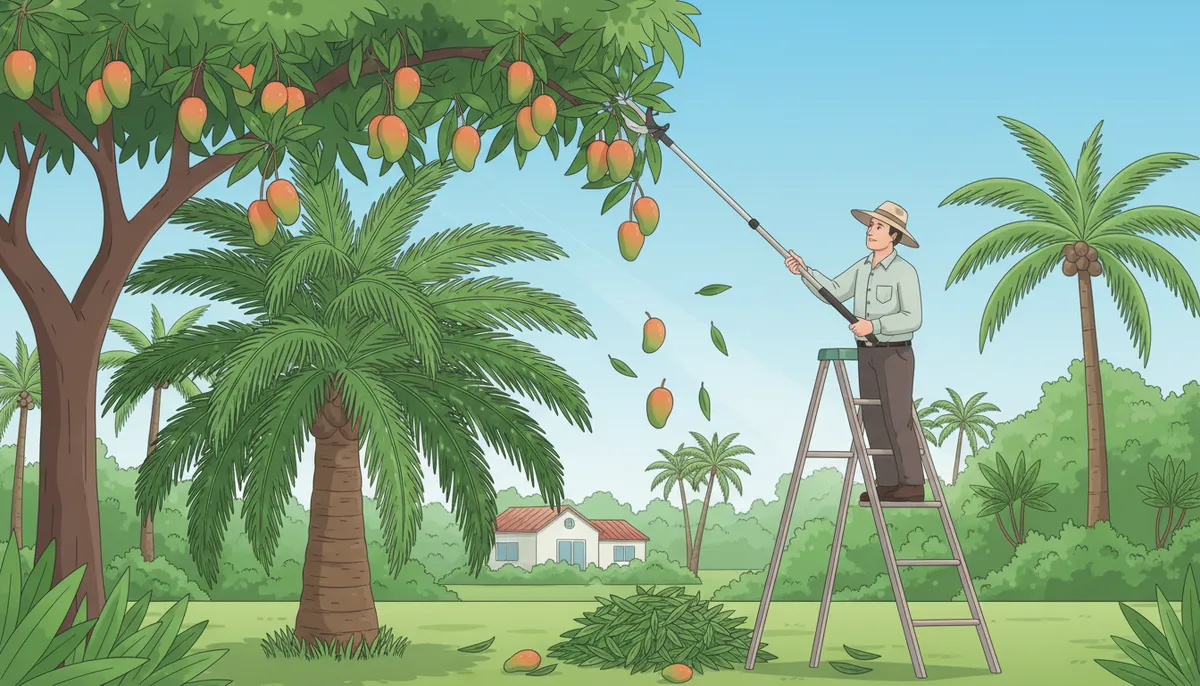
Florida’s warm, humid climate is ideal for palm trees and mango trees. But that same climate also means rapid growth, heavy storm seasons, and constant maintenance demands. Overgrown palms can drop fronds on rooftops, driveways, and people. Unpruned mango trees become tangled canopies that block sunlight and reduce fruit production significantly.
Proper trimming improves air circulation, reduces disease risk, and keeps your yard looking its best year-round. It also reduces the volume of debris that accumulates — which is where professional junk removal in Brandon services become valuable after a major trim session.
10 Expert Tips for Palm Tree Trimming and Mango Pruning
1. Prune Mango Trees Right After Harvest
Timing is everything with mango trees. The best time to prune is immediately after the harvest season — ideally by the end of December or no later than August. This gives the tree enough time to develop new growth and set flower buds for the next season. Pruning too late pushes back fruiting by an entire cycle.
2. Follow the 9-to-3 Rule for Palm Trees
When trimming palm trees, use the “9 to 3” rule as your guide. Imagine a clock face on the tree. Remove only fronds that hang below the 9 o’clock and 3 o’clock positions — essentially anything drooping below horizontal. Fronds above that line are still actively photosynthesizing and should be left in place. This simple rule protects tree health while keeping the palm looking clean and tidy.
3. Never Over-Trim Your Palm Tree
Over-trimming — also called “hurricane cutting” — is one of the most common mistakes homeowners make. Removing too many green fronds weakens the tree, slows growth, and makes it more vulnerable to pests and disease. Stick to removing only dead, brown, or clearly dying fronds during each trimming session. Healthy green fronds should stay put.
4. Cut Fronds at Least 2 Inches from the Trunk
When removing palm fronds, always leave about 2 inches of the frond base attached to the trunk. Cutting too close damages the trunk’s protective layer and creates entry points for disease and insects. This small detail makes a significant difference in the long-term health of the tree. Use sharp, clean tools to make smooth cuts every time.
5. Shape Mango Trees to 12-15 Feet for Easy Management
For residential mango trees, aim to maintain a height of 12 to 15 feet with 3 to 4 main scaffold branches. This height makes harvesting much easier and keeps the tree manageable without specialized equipment. When shaping the tree, remove lower branches up to 4 feet from the ground. This improves air circulation at the base, simplifies lawn maintenance underneath, and reduces weed growth in the surrounding area.
Maintaining a properly shaped mango tree also supports your overall landscaping services plan by keeping the yard tidy and functional.
6. Avoid Heavy Pruning on Mango Trees
Heavy or aggressive pruning on a mature mango tree can delay fruiting by 2 to 3 years. When in doubt, do less. Focus on thinning cuts that open up the canopy rather than heading cuts that remove large portions of branches. For commercially grown trees, experts recommend removing no more than 25 to 30 percent of the canopy in a single session. For home trees, err on the conservative side.
| Pruning Type | Best For | Risk Level | Fruiting Impact |
|---|---|---|---|
| Thinning Cuts | Airflow, light penetration | Low | Minimal delay |
| Heading Cuts | Height reduction | Medium | Moderate delay |
| Heavy Pruning | Rejuvenation only | High | 2-3 year delay |
| Maintenance Pruning | Ongoing care | Very Low | No delay |
7. Remove Dead Wood and Crossing Branches First
Before making any shaping cuts on a mango tree, start by removing dead wood, diseased branches, and any branches that cross or rub against each other. This is maintenance pruning — the foundation of every good trim session. Dead wood invites pests and fungal disease. Crossing branches create wounds as they rub together over time.
8. Use the Right Tools and Keep Them Clean
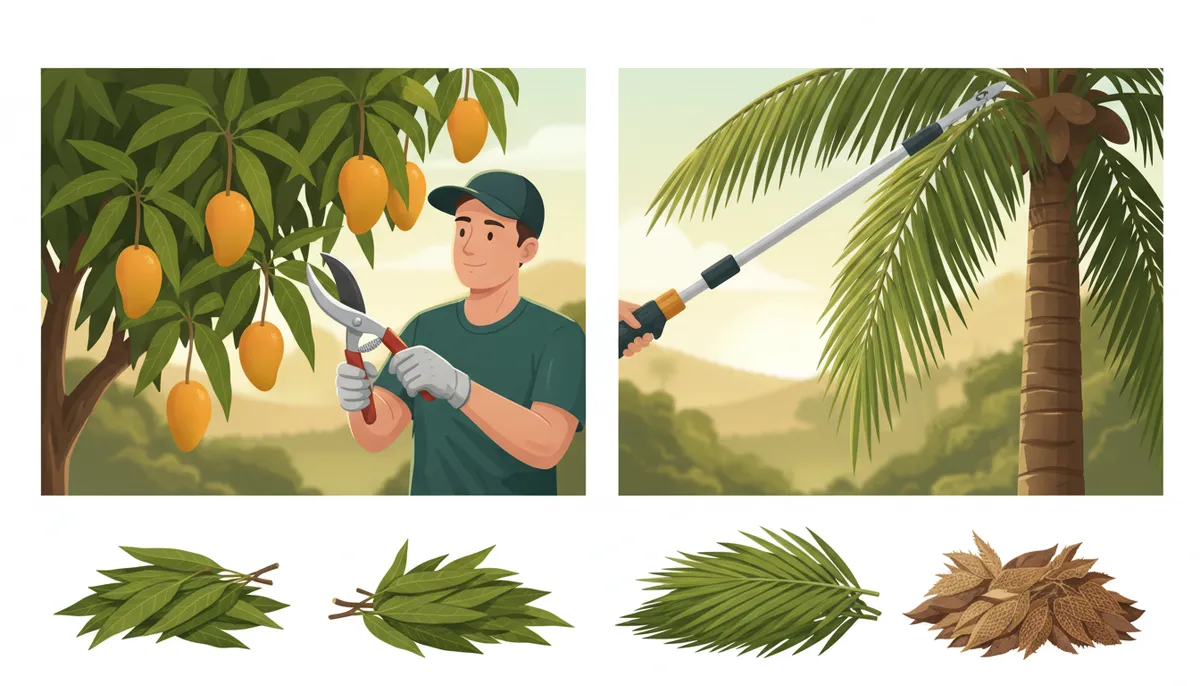
Using dull or dirty tools is a fast track to tree damage and disease spread. Here is what you need for palm tree trimming and mango pruning:
- Sharp hand pruners for small branches under 1 inch
- Loppers for branches 1 to 2 inches in diameter
- A pruning saw for larger limbs
- A pole saw or pole pruner for high fronds
- Disinfectant spray (70% isopropyl alcohol or diluted bleach) to clean blades between trees
Clean tools between cuts when working around diseased wood. This one habit prevents the spread of fungal infections and bacterial disease from one branch — or one tree — to another.
9. Know Florida’s Licensing Requirements
In many Florida counties, only certified and licensed tree trimmers can legally prune mango or palm trees. This is especially true in areas where tree protection ordinances are in place. Hiring an unlicensed contractor can result in fines, liability issues, or damage that voids your homeowner’s insurance. Always verify that your tree trimming professional carries the appropriate license and insurance before work begins.
Wayne & Sons Landscaping & Junk Removal is a fully licensed and insured company (License #: G21000055178) with over 15 years of experience serving Brandon and the greater Tampa Bay area. You can also check their reputation on Thumbtack before booking.
10. Plan for Debris Removal Before You Start
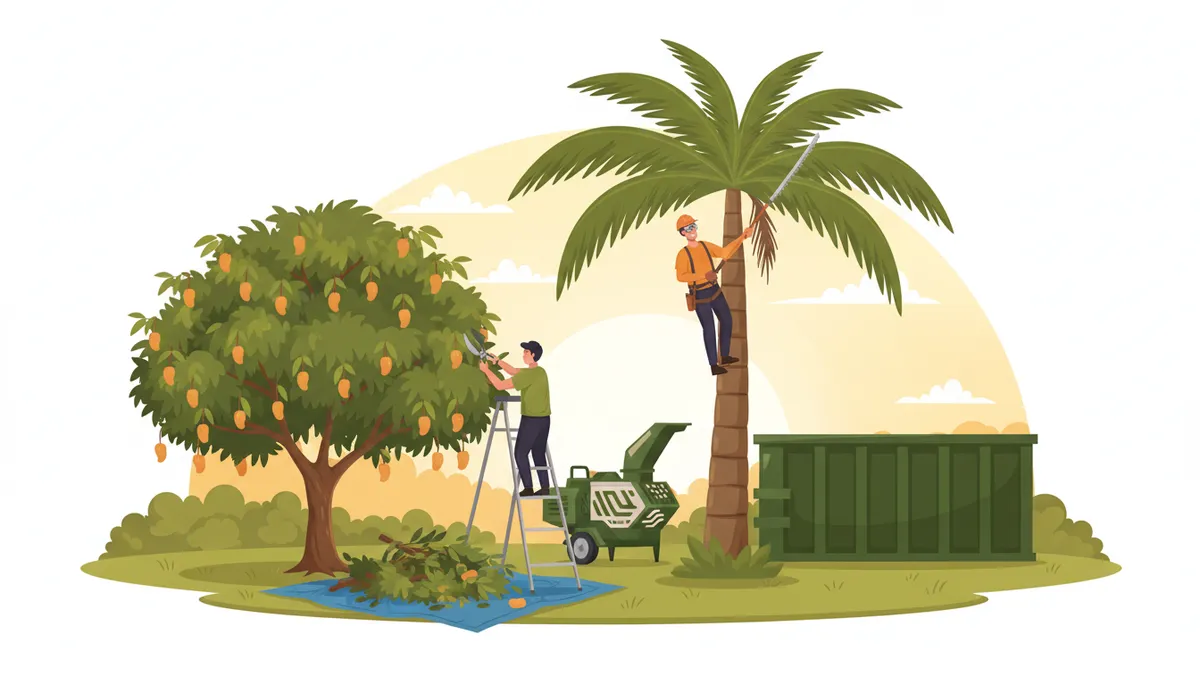
Palm fronds are bulky. Mango branches and cuttings pile up fast. Before you start any significant trimming session, have a plan for debris removal. A major palm tree trimming job or mango tree pruning session can generate a surprising volume of green waste. Professional junk hauling in Brandon services handle this efficiently, removing debris the same day so your yard looks clean from start to finish.
Palm Tree vs. Mango Tree: Key Trimming Differences
| Factor | Palm Tree Trimming | Mango Tree Pruning |
|---|---|---|
| Best Time | Spring or early summer | After harvest (Dec or Aug) |
| Main Goal | Safety, appearance | Fruit production, shape |
| How Much to Remove | Only below 9-3 line | Max 25-30% of canopy |
| Key Tool | Pole saw, pruning saw | Loppers, pruning saw |
| Frequency | 1-2 times per year | Once per year post-harvest |
| License Required | Yes (Florida) | Yes (Florida) |
What to Expect from Professional Tree Trimming Costs
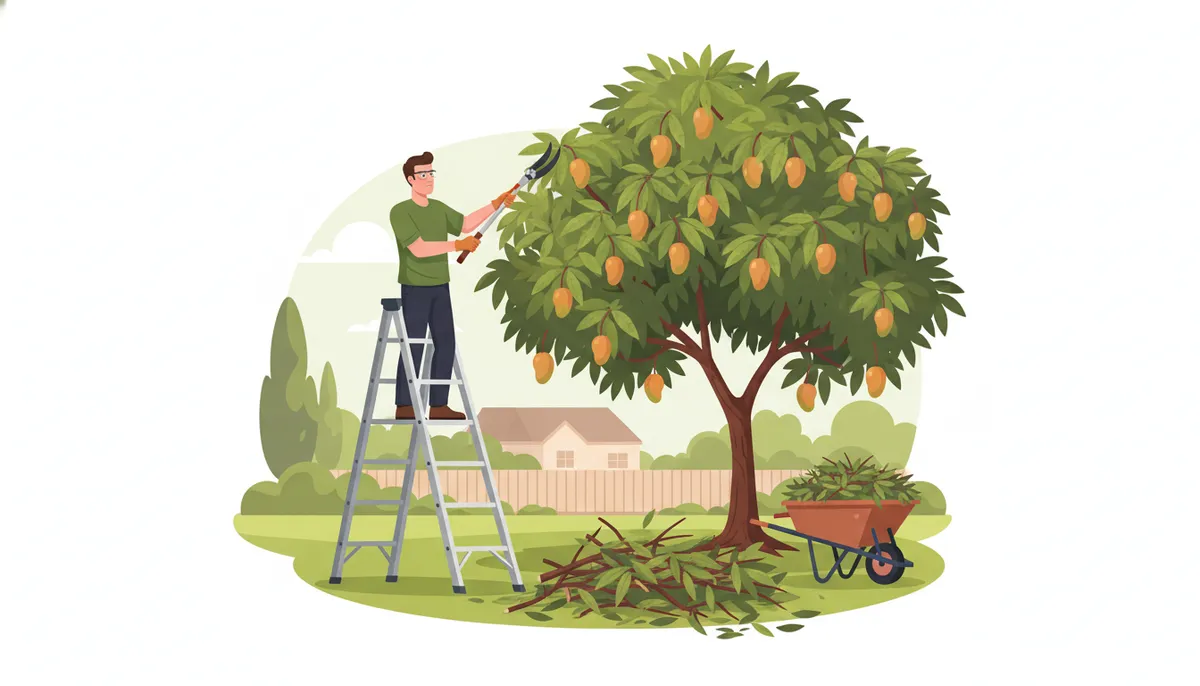
Tree trimming costs vary based on tree height, species, and the complexity of the job. Here is a general national reference for budgeting purposes:
| Tree Size | Height Range | Estimated Cost Range |
|---|---|---|
| Small Tree | Under 30 feet | $75 – $450 |
| Medium Tree | 30 – 60 feet | $150 – $850 |
| Tall Tree | 60 – 80 feet | $500 – $1,000+ |
Wayne & Sons Landscaping & Junk Removal offers transparent, upfront pricing with no hidden fees. Reach out directly to get a clear estimate for your specific property and tree situation. Learn more about our palm tree trimming services or explore our full landscaping services in Brandon and surrounding areas.
After the Trim: Handling Debris and Green Waste
Once the trimming is done, you are left with a pile of fronds, branches, and cuttings. Managing this green waste is a critical part of the job. Here are your options:
- Bag smaller cuttings for curbside green waste pickup
- Chip branches into mulch for use in garden beds
- Schedule same-day storm debris removal in Brandon for large volumes
- Contact a professional junk hauling service for full cleanout
- Compost small mango prunings in a backyard compost bin
If a tree comes down during a storm or needs to be fully removed, professional down tree removal in Brandon services handle the entire process safely and efficiently. Pairing tree removal with demolition cleanup in Brandon is a smart move for larger renovation or construction projects.
Additional Landscape Services That Complement Tree Trimming
Tree trimming rarely happens in isolation. A well-maintained yard involves multiple services working together. After completing your palm or mango trim, consider these complementary services to keep your landscape in top condition:
- Shrub and hedge trimming to keep borders clean and defined — see our hedges in Brandon and shrubs in Brandon services
- Lawn care and edging to frame the freshly trimmed trees
- Furniture or appliance removal if old yard items have accumulated — furniture removal in Brandon makes this easy
- Full property cleanouts for seniors downsizing or estates being cleared
A proper lawn care routine combined with regular tree trimming keeps your entire outdoor space looking professional and well-managed throughout the year.
Summary: Key Rules to Remember
Before calling a professional or picking up your pruning saw, review these core principles:
- Prune mango trees immediately after harvest for best results
- Never remove more than 25-30% of a mango tree’s canopy at once
- Follow the 9-to-3 rule for palm tree frond removal
- Always leave 2 inches of frond base on palm trunks
- Use clean, sharp tools to prevent disease spread
- Verify your tree trimmer is licensed and insured in Florida
- Plan debris removal before the job starts
Conclusion
Palm tree trimming and mango tree pruning are two of the most impactful services you can invest in for your Florida property. Done correctly, they improve safety, boost curb appeal, and support healthy fruit production for years to come. Done incorrectly, they can set a tree back by several growing seasons — or cause permanent damage.
With over 15 years of experience serving Brandon, Riverview, Tampa, and surrounding communities, Wayne & Sons Landscaping & Junk Removal brings the expertise and equipment needed to get the job done right. Visit us on Google to read what our customers say about our work. Then take the next step toward a healthier, more beautiful yard.
Schedule your tree trimming service today or call our team directly at (813) 452-1570 to get a free, transparent estimate with no surprises.
FAQs
Q: When is the best time to prune a mango tree in Florida?
A: The best time to prune a mango tree is immediately after harvest — ideally by the end of December or no later than August. This timing allows the tree sufficient recovery time to produce new growth and set flower buds for the following season. Pruning outside this window can delay fruiting by one or more growing cycles.
Q: How do I trim a palm tree without damaging it?
A: Use the 9-to-3 rule: remove only fronds that hang below a horizontal line (the 9 and 3 o’clock positions). Always leave approximately 2 inches of the frond base attached to the trunk to protect the tree’s outer layer. Avoid removing healthy green fronds, as this weakens the tree and increases its vulnerability to pests and disease.
Q: Is a license required for tree trimming in Florida?
A: Yes, in many Florida counties, tree trimming must be performed by a certified and licensed professional. Hiring an unlicensed contractor can result in fines and potential liability issues. Always confirm that your tree trimming service carries a valid Florida license and full insurance coverage before any work begins.
Q: What happens if you prune a mango tree too heavily?
A: Heavy pruning on a mango tree — removing more than 25 to 30 percent of the canopy — can delay fruit production by 2 to 3 years. It also places significant stress on the tree, making it more susceptible to pests and environmental damage. Focus on thinning cuts and maintenance pruning to maintain tree health without sacrificing the next harvest.
Q: How do I handle debris after palm tree trimming or mango pruning?
A: After a trimming session, palm fronds and mango branches can accumulate quickly. Options include curbside green waste pickup, chipping branches into mulch, or scheduling professional junk hauling services for larger volumes. A reputable landscaping and junk removal company can handle debris removal on the same day as the trim, leaving your property clean and cleared immediately.
Our Service Area