Key Takeaways
-
Define the full scope before getting quotes: clarify whether you want dismantling, hauling, contents cleanout, slab removal, and site cleanup, since a vague request leads to surprise add-on fees.
-
Insist on an itemized quote that lists labor, loading, disposal fees, contents cleanout, foundation removal, and cleanup, because the lowest number often leaves out costs that raise the final bill.
-
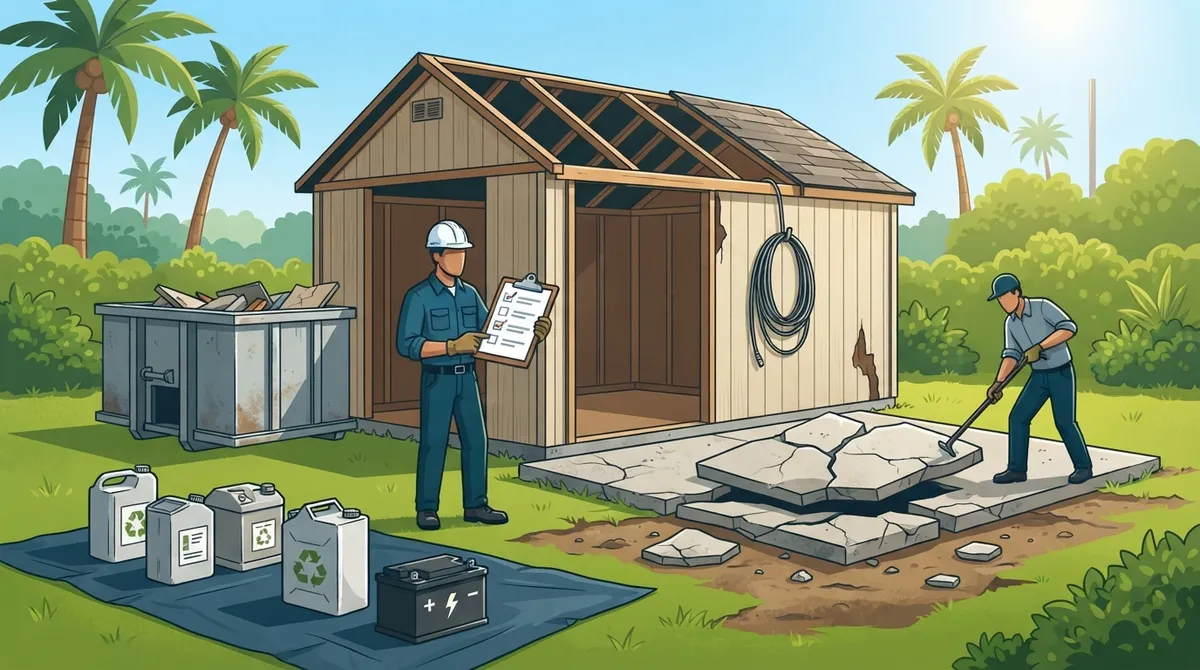
Decide early whether to keep or remove the concrete slab, since breaking up and hauling concrete is heavy, time-consuming, and adds significant disposal weight to the job.
-
Check for electrical wiring and have it safely disconnected before demolition; unusual wiring should be handled by a qualified electrician, not cut during teardown.
-
Set aside hazardous items like paint, gasoline, solvents, pesticides, propane, and batteries for proper disposal, and have older sheds checked for asbestos before anyone disturbs them.
-
Confirm local permit and disposal rules with your building department, waste facility, and HOA or lease before work begins to avoid delays in Lutz, FL.
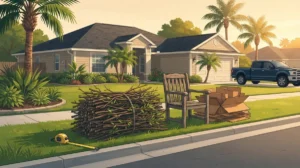
Let’s be honest. That old shed in the back corner of your yard did not start out as a problem. It held the mower, the paint cans, and a few holiday boxes. Then the roof started to sag, the door stopped closing, and now it’s a hot, buggy box you’d rather not open. If you have a shed for removal in Lutz, FL, you’re in good company, and you can get it done without a headache.
The trouble is that shed removal looks simple until you start. Hidden wiring, a stubborn concrete slab, old paint cans, and a soft Florida roof can turn a free weekend into a long, sweaty project. A few smart choices up front can save you real time and stress.
In this guide, we walk through eight common mistakes people make when they have a shed for removal. We also share tips for homeowners, landlords, agents, contractors, and seniors who want a clean yard without the heavy lifting. Let’s get started.
What Does Shed Removal Really Mean?
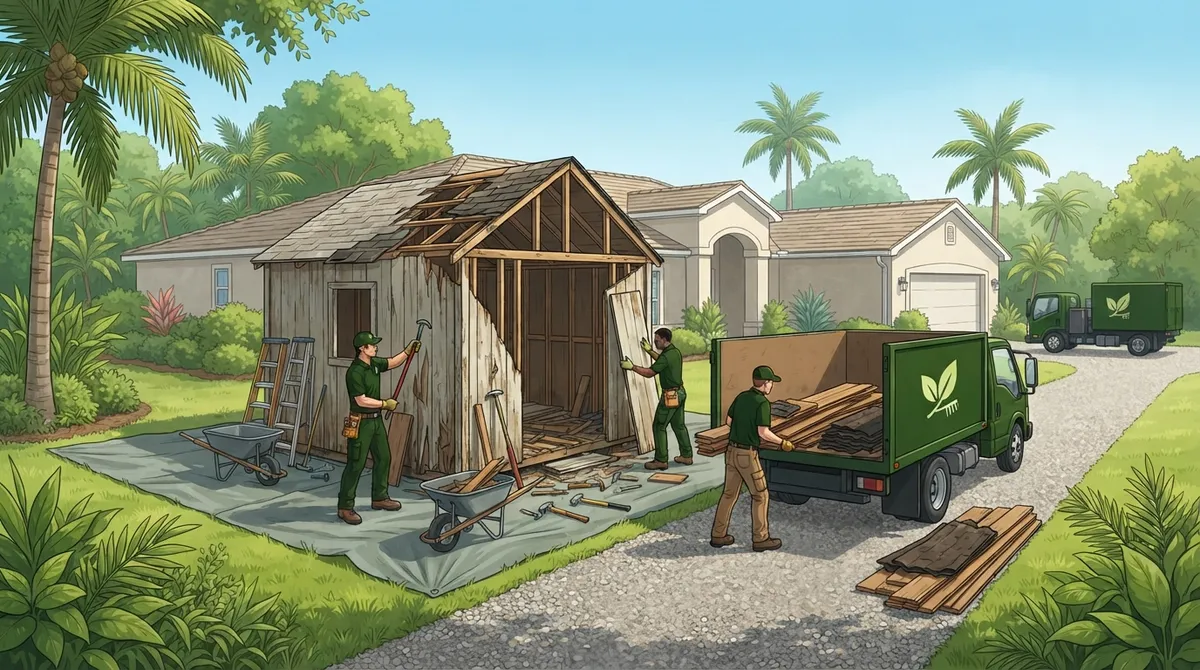
When people say they have a shed for removal, they usually mean they want it taken apart and hauled away. That sounds clear, but it can mean very different things. Some folks only want the walls and roof gone. Others also want the stored items cleared, the floor pulled up, and the slab removed.
Here is what a full job can include:
- Dismantling: taking down the roof and walls in sections
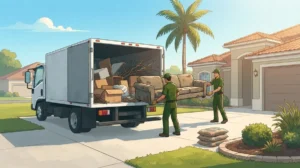
- Loading and hauling: moving all the debris onto a truck
- Disposal: taking materials to the right facility
- Contents cleanout: clearing what is still stored inside
- Foundation removal: pulling out a slab, blocks, or pier footings
- Site cleanup: raking, leveling, and clearing the footprint
Not every service includes every item. That is why a clear, itemized quote matters so much. Ask what is in and what is out before anyone picks up a tool.
Mistake 1: Not Defining the Scope of Work
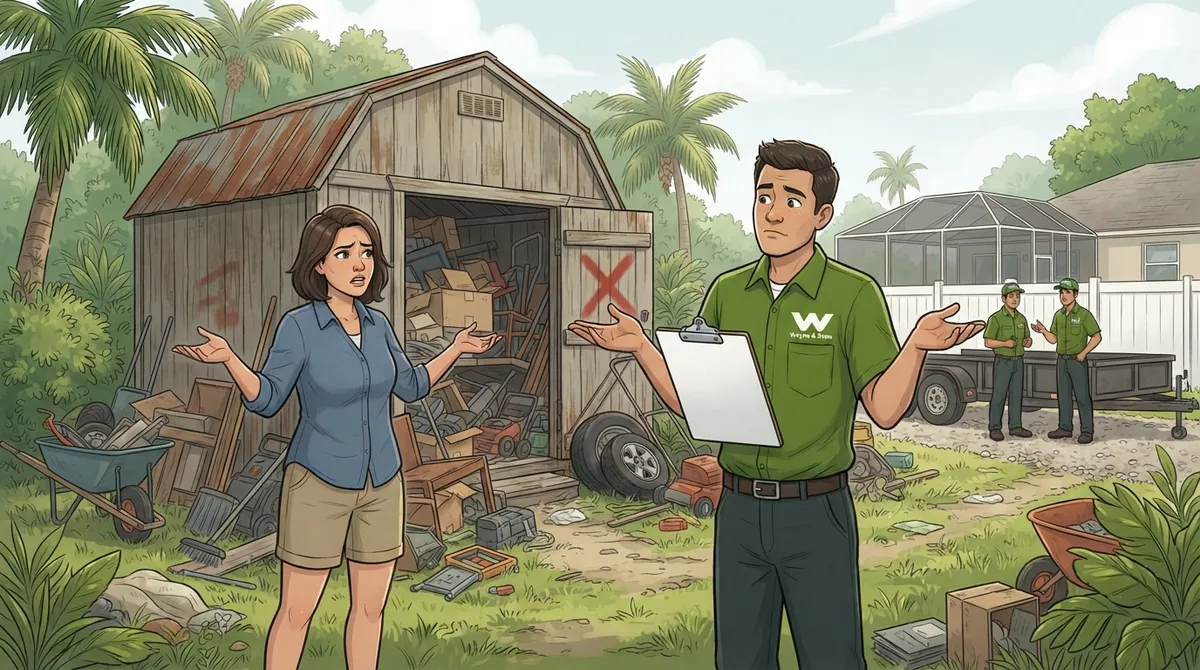
The biggest mistake is a fuzzy request. Saying “take the shed” leaves a lot open. Does that include the shelves, the junk inside, and the slab underneath? If you and the crew picture different jobs, you may face surprise add-ons later.
Before you call anyone, walk the shed and write a quick list. Note the size, the building material, and what is stored inside. Check whether there is a slab, block base, or wood floor. Look for power lines or outlets. Take a few photos from different sides.
This small step helps a crew give you an accurate quote. It also helps you compare offers fairly. A good company will ask about all of this, because size, materials, access, and foundation all shape the price.
Mistake 2: Skipping the Itemized Quote
Many homeowners grab the lowest number and move on. That can backfire. A low quote might leave out disposal fees, contents cleanout, or foundation work. Then the final bill creeps up.
Online cost guides show just how wide the range can be. One 2026 U.S.-focused guide lists a broad professional range of about $350 to $2,800, with many residential jobs landing near $500 to $1,600. Other 2026 estimates cite roughly $250 to $3,000, with an average near $650. Those numbers are rough. They shift with location, shed size, material, access, and disposal fees, so treat them as general guides, not promises.
Ask for a quote that spells out each piece. Here is what to look for:
| Quote Item | What to Ask |
|---|---|
| Dismantling | Is labor for taking the shed apart included? |
| Loading and transport | Is hauling covered in the price? |
| Disposal charges | Are dump or facility fees included? |
| Contents cleanout | Will the crew clear stored items? |
| Foundation removal | Is the slab or base part of the job? |
| Site cleanup | Will the area be left clean and level? |
If you want more help reading estimates, our guide on 7 things to know before getting a junk removal quote breaks it down in plain language.
Mistake 3: Forgetting About the Slab or Foundation
Here is a surprise that catches many people. You clear the shed, and then you stare at a big concrete pad. That slab is often a separate chunk of work. Concrete slabs, block foundations, and wood skids all take different effort to remove.
Concrete is heavy and dense. Breaking it up and hauling it costs more time and disposal weight than hauling a wood shed. Some people leave the slab in place and use it for a patio, a fire pit area, or a spot for a new structure. Others want it gone so they can plant grass or flowers.
Decide early what you want the space to become. If you plan new landscaping, a clean, level footprint is a big help. For ideas on what to do next, take a look at what backyard landscaping really includes. And if concrete is part of your project, our simple guide to hauling away concrete explains how it works.
Mistake 4: Leaving Stuff Inside the Shed
It sounds obvious, but it happens all the time. A shed has been closed for years, and nobody remembers what is inside. Old paint, rusty tools, broken chairs, and mystery boxes all pile up. If the crew has to clear it first, that adds time to your job.
Before removal day, either empty the shed yourself or ask that contents cleanout be included in the quote. Sort things into piles:
- Keep: tools and items you still use
- Donate: clean, working items someone else can use
- Recycle: scrap metal and similar materials
- Haul away: broken, worn-out, or unwanted junk
For seniors and families sorting through years of belongings, this step can feel big. A crew that handles both shed removal and junk hauling can take the load off your shoulders. Our post on why your yard needs a junk hauling service shows how that works in real life.
Mistake 5: Ignoring Electrical Wiring
Some sheds have power. Maybe a past owner ran a line for lights, a workbench, or a window unit. Cutting into a live wire is risky, and it is not a job for a casual weekend demo.
Always confirm whether your shed has electrical connections. Look for outlets, switches, conduit, or a line running from the house. If you see any, the power should be safely disconnected first. Unusual wiring should be handled by a qualified electrician, not cut during demolition.
This is a safety step, plain and simple. Tell your removal crew about any wiring up front. It helps them plan the job, and it keeps everyone safe on site.
Mistake 6: Treating Hazardous Items Like Regular Trash
Sheds are famous for storing things that should never go in a normal dump load. Think about what is tucked on those shelves. Old paint, gasoline, solvents, pesticides, propane cylinders, and batteries are all common finds.
These items can need separate handling and disposal. Do not assume a general junk crew can take them. Local rules vary, and some materials must go to a qualified provider or a hazardous waste drop-off. Older sheds may also contain materials, like certain roofing or siding, that could include asbestos. If you suspect asbestos, stop and get it checked by a qualified professional before anyone disturbs it.
Here is a simple way to stay safe:
- Check shelves and corners for paint cans, fuel, and chemicals
- Keep containers closed and upright
- Never mix chemicals or pour them out
- Tell your removal company what is inside before the job
- Ask where hazardous items should go in your area
Being upfront helps the crew plan properly and avoids delays on removal day.
Mistake 7: Overlooking Permits and Local Rules
Permit rules depend on where you live and what you are doing. Shed size, location on your lot, utility connections, and foundation removal can all matter. In Lutz, FL, and across Hillsborough and Pasco counties, requirements can differ, so it pays to check.
Before work begins, make a quick call to your local building department and the waste facility that will take the debris. Ask whether demolition or removal needs a permit, and what disposal rules apply. If you rent or live in an HOA community, also check your lease or association rules. Some communities have their own approval steps.
Property managers and real estate agents especially should confirm this early. A surprise rule can stall a listing or a tenant turnover. A little homework keeps your timeline on track.
Mistake 8: Tackling It Alone Without Weighing the Work
A DIY teardown can look like a fun weekend project. Then you meet the rusty screws, the heavy roof panels, and the Florida heat. Sheds can also hide wasps, rotted boards, and sharp metal edges.
One Connecticut provider describes a standard shed job as taking about one to three hours on site. That is for trained crews with the right tools and a truck. A homeowner working alone often needs far longer, plus multiple dump trips. Size, build, access, and whether the foundation or contents are included all change the timeline.
Think about what you will need if you go solo: tools, a trailer or truck, protective gear, and a plan for disposal. Then compare that to the cost of a professional crew. Our breakdown of DIY vs. pro shed demolition walks through the trade-offs, and DIY vs. pro shed removal adds more local detail.
For many busy homeowners, a professional crew is the easier path. If you want a quick overview of what to look for, read our guide on what to know before you hire a shed removal service.
How Different Shed Materials Change the Job
Not all sheds are built the same, and the material changes how the crew works. Here is a quick look:
| Shed Type | What to Expect |
|---|---|
| Wood | Comes apart in sections; can be heavy if soaked or rotted; clean wood may be recyclable |
| Metal | Sharp edges; panels unbolt or are cut; scrap metal may be recycled |
| Resin or plastic | Lighter panels; often snaps apart; fewer recycling options |
| Masonry or block | Very heavy; more labor and disposal weight; often costs more |
Crews commonly take the roof and walls down in sections, load the debris, and then clear the footprint. Long carry distances and tight gate access can add real work. If your shed sits at the back of a narrow lot, mention that in your quote request so there are no surprises.
What Happens to Your Old Shed After Pickup?
Many people wonder where the pieces end up. The answer depends on the materials and local options. Reusable items and recyclable materials, like scrap metal, clean wood, and concrete, may be kept out of the landfill where nearby facilities accept them.
Recycling claims vary by company. One Canadian junk removal provider advertises recycling up to 60% of shed materials, but that is a single company’s claim, not an industry-wide number. So it is smart to ask your provider what actually gets recycled and how disposal is handled.
If you care about waste, you can learn more in our post on whether junk removal is recyclable. You can also see how hauling choices play out in where junk removal takes your stuff.
Who Benefits Most From Professional Shed Removal in Lutz, FL?
Different people have different reasons for clearing a shed. Here is how a pro crew helps each group:
- Busy homeowners: You get your weekend back and a clean yard without the sweat.
- Real estate agents: A rundown shed can hurt curb appeal. Removing it helps a listing show better.
- Property managers: Fast cleanouts keep rental units compliant and ready for the next tenant.
- Contractors and builders: Old structures often need to go before a new build, pool, or addition.
- Downsizing seniors: A crew can handle the heavy work and the contents so you do not have to.
- Small business owners: A clear, tidy lot makes a better first impression for customers.
If you are a landlord or manager dealing with a bigger turnover, our guide to eviction clean outs for landlords may help. And if a shed is part of a bigger demolition, see what demolition and junk removal in Lutz, FL includes.
Your Simple Shed Removal Game Plan
Ready to move forward? Follow these steps for a smooth job:
- Walk the shed. Note the size, material, contents, wiring, and base.
- Decide the goal. Choose whether you want the slab gone and what the space will become.
- Check local rules. Confirm permit and disposal requirements for Lutz, FL.
- Clear or flag the contents. Empty it yourself or include cleanout in the quote.
- Handle special items. Set aside paint, fuel, and chemicals for proper disposal.
- Get an itemized quote. Make sure each task is spelled out.
- Schedule and prep access. Clear a path so the crew can work safely.
Follow these and you will avoid nearly every mistake on this list. If your project grows into a bigger yard refresh, our post on full renovation vs. quick refresh can help you plan what comes next.
Why Wayne & Sons Is a Smart Choice for Lutz Homeowners
At Wayne & Sons Landscaping & Junk Removal, we bring over 15 years of experience to yards across the Tampa Bay area, and we proudly serve Lutz, FL. We handle both sides of this job. That means one crew can take down the shed, haul away the contents and debris, and help get your yard ready for what is next, whether that is fresh sod, new shrubs, or a clean open lawn.
We keep things simple. You get prompt, hassle-free service, detailed upfront estimates with no surprises, and friendly customer service from start to finish. Our rates are very affordable, and we always walk you through what is included. Want to hear from neighbors? Read what customers say on Thumbtack or visit us on Google — Wayne & Sons Landscaping & Junk Removal.
We are based in Brandon, Florida, and our team knows the local yards, soil, and storms. Lutz properties often have mature trees, big lots, and older outbuildings, so we are used to tricky access and big cleanups. We also appreciate good tools and good partners, which is why we like working with local pros such as BluHalo and Brain Buzz Marketing in our community.
Final Thoughts: Make Your Shed Removal Easy
A shed for removal does not have to be a big headache. When you define the scope, get an itemized quote, plan for the slab, handle hazardous items, and check local rules, the whole process gets smoother. Most of all, you do not have to do it alone.
If you are ready to reclaim that corner of your yard in Lutz, FL, we would love to help. Contact us for a clear, upfront estimate, call us at 813-452-1570, or text us at 813-452-1570. Let’s turn that tired old shed into a fresh start for your yard.
FAQs
Q: How much does it cost to remove a shed?
A: Costs vary a lot based on size, material, access, contents, foundation work, and disposal fees. One 2026 U.S.-focused guide lists a broad range of about $350 to $2,800, with many homes near $500 to $1,600, but those are rough estimates. The best move is to request an itemized quote for your specific shed in Lutz, FL.
Q: Does shed removal include dismantling and hauling?
A: Usually yes, but not always, so it’s worth asking. Most crews take the roof and walls down in sections, load the debris, and haul it away. Contents cleanout, slab removal, and site cleanup may be separate items, so make sure your quote spells them out.
Q: Do I need a permit to remove a shed?
A: It depends on your local rules, the shed’s size and location, any utility connections, and whether the foundation is being removed. Give your local building department and waste facility a quick call before work begins. If you live in an HOA, check those rules too.
Q: How should I prepare a shed before removal?
A: Empty it or include contents cleanout in your quote, and set aside paint, fuel, and chemicals for proper disposal. Make sure any electrical connections are safely disconnected by a qualified electrician. Clear a path to the shed so the crew can work safely and quickly.
Q: Can shed materials be recycled or donated?
A: Often, yes. Clean wood, scrap metal, and concrete may be recycled where local facilities accept them, and reusable items can sometimes be donated. Ask your provider exactly what gets recycled and how disposal is handled.
Our Service Area