Key Takeaways
-
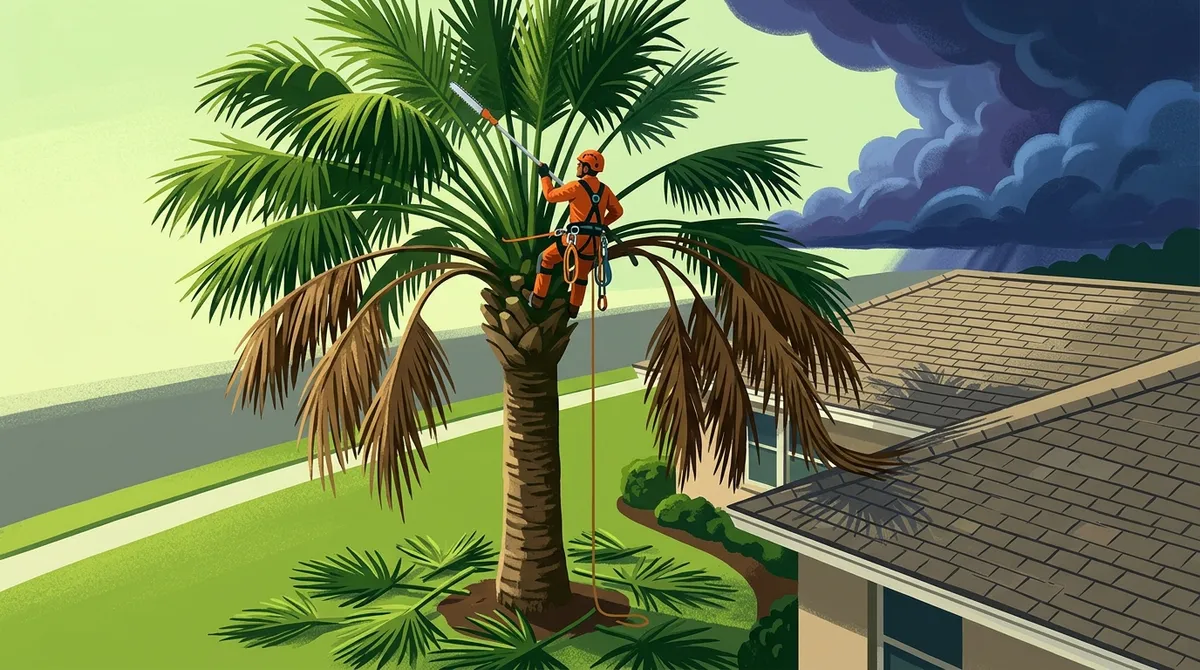
Schedule palm tree trimming in late spring before hurricane season to reduce wind resistance and canopy weight, helping trees withstand strong storms.
-
Most residential palms in Tampa need trimming once or twice yearly; trees near roofs or structures require more frequent maintenance to prevent damage.
-
Professional trimming costs $270-$450 per service and includes dead frond removal, seed pod cutting, canopy shaping, and debris cleanup—avoid DIY due to safety and over-trimming risks.
-
Overgrown palms with dead fronds, drooping canopies, or debris at the base are safety hazards that can damage roofs, vehicles, and attract pests during storms.
-
Hire a Tampa-based company with local experience in tropical palm care, proper licensing/insurance, and transparent upfront pricing rather than general contractors.
-
Coordinate palm trimming with complementary services like hedge trimming, tree removal, and junk removal to save time and reduce overall maintenance costs.
Palm trees are a defining feature of Tampa’s landscape. They add beauty, shade, and tropical charm to homes and properties across the area. But without proper care, they can quickly become a safety hazard or an eyesore. That’s why palm tree trimming in Tampa is one of the most important landscaping services for local property owners.
Whether you’re a busy homeowner, a property manager, or a real estate professional preparing a listing, keeping your palms well-maintained matters. Overgrown fronds, dead leaves, and heavy seed pods don’t just look bad — they can cause real damage during storms, attract pests, and even become a liability issue. In Tampa’s tropical climate, palm maintenance isn’t optional. It’s essential year-round.
This guide covers everything you need to know about professional palm tree trimming in the Tampa area, including what the service includes, how often to schedule it, and what to expect from a qualified landscaping team.
What Is Palm Tree Trimming and Why Does It Matter?
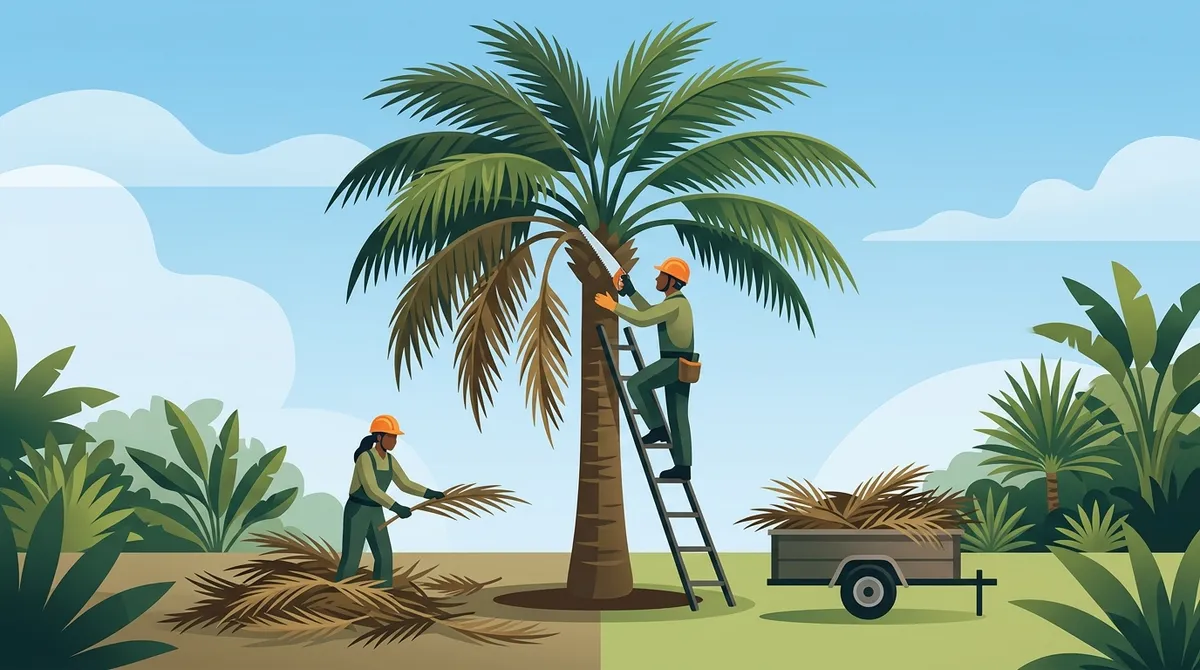
Palm tree trimming is the process of removing dead, dying, or overgrown fronds from a palm tree. It also includes cutting away seed pods, fruit clusters, and any debris that collects around the base of the canopy. Done correctly, trimming keeps the tree healthy, safe, and visually appealing.
In the Tampa Bay region, palms face unique stressors. High humidity, heavy rainfall, and hurricane season all take a toll. Poorly maintained palms can develop weak canopies that shed fronds during storms. Those falling fronds can damage roofs, vehicles, and even injure people. Regular trimming significantly reduces those risks.
Beyond safety, well-trimmed palms simply look better. A clean, symmetrical canopy enhances curb appeal and can even boost property values. For homeowners in communities like Brandon, Florida and surrounding Tampa Bay neighborhoods, that visual impact matters.
Signs Your Palm Tree Needs Trimming
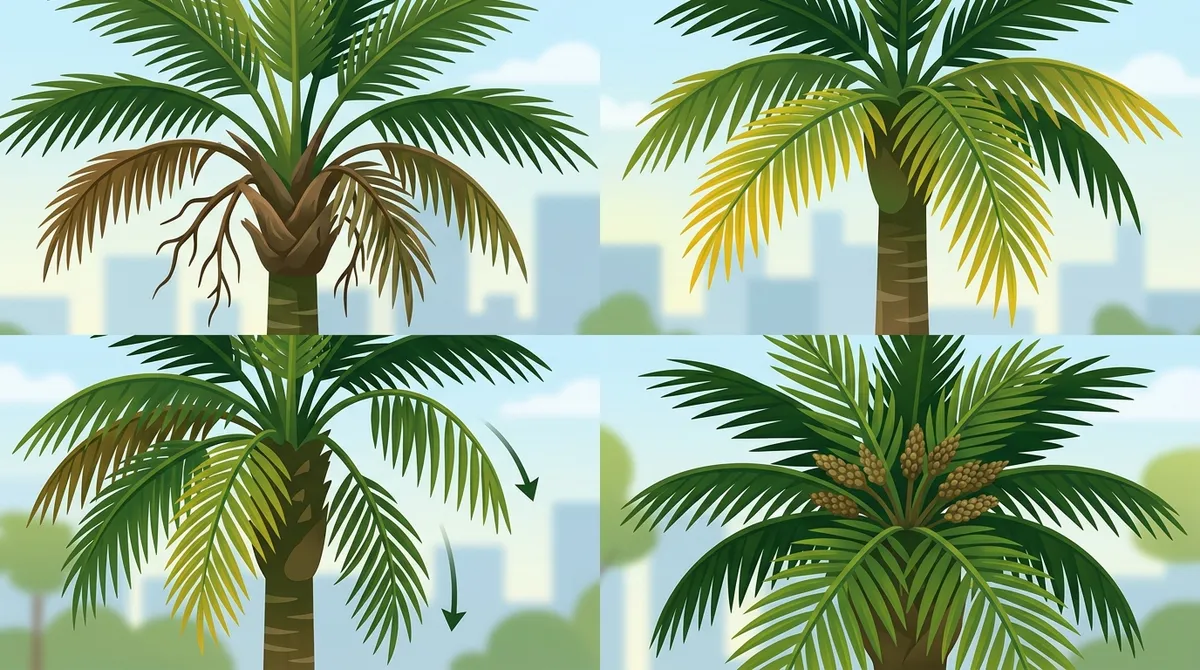
Not sure if your palms are due for a trim? Here are clear signs it’s time to call a professional:
- Dead or brown fronds hanging from the canopy
- Fronds drooping below the horizontal line of the canopy
- Visible seed pods or flower stalks that are drying out
- Fronds scraping against your roof, gutters, or power lines
- Debris piling up at the base of the tree
- Pest activity or visible damage to the trunk near the canopy
If you notice any of these signs, it’s best not to wait. Overgrown palms are harder and more expensive to trim. Addressing the issue early keeps costs reasonable and the tree healthy.
How Often Should Palm Trees Be Trimmed in Tampa?
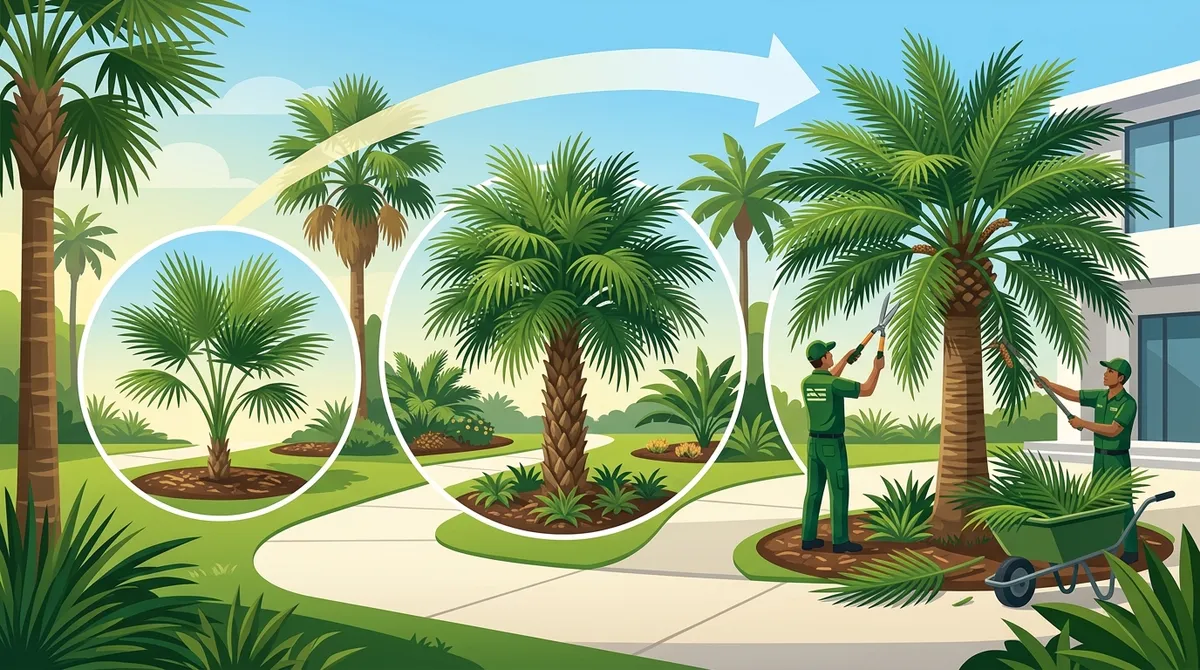
Most palm trees in the Tampa area should be trimmed once or twice per year. The exact frequency depends on the species, the age of the tree, and the conditions on your property. Fast-growing species or palms near structures may need more frequent attention.
Here’s a general trimming schedule based on common situations:
| Situation | Recommended Frequency |
|---|---|
| Standard residential palm | Once per year |
| Palm near roof or structure | Twice per year |
| Palm in high-visibility area (front yard) | Twice per year |
| Commercial property palms | Quarterly or as needed |
| Post-storm emergency trimming | As needed after storm events |
Timing also matters. Late spring, just before hurricane season, is an ideal time for palm tree trimming in Tampa. Removing excess weight from the canopy helps the tree withstand strong winds. If you’re unsure what schedule is right for your trees, a professional landscaping team can assess your property and make a recommendation.
What Does Professional Palm Tree Trimming Include?
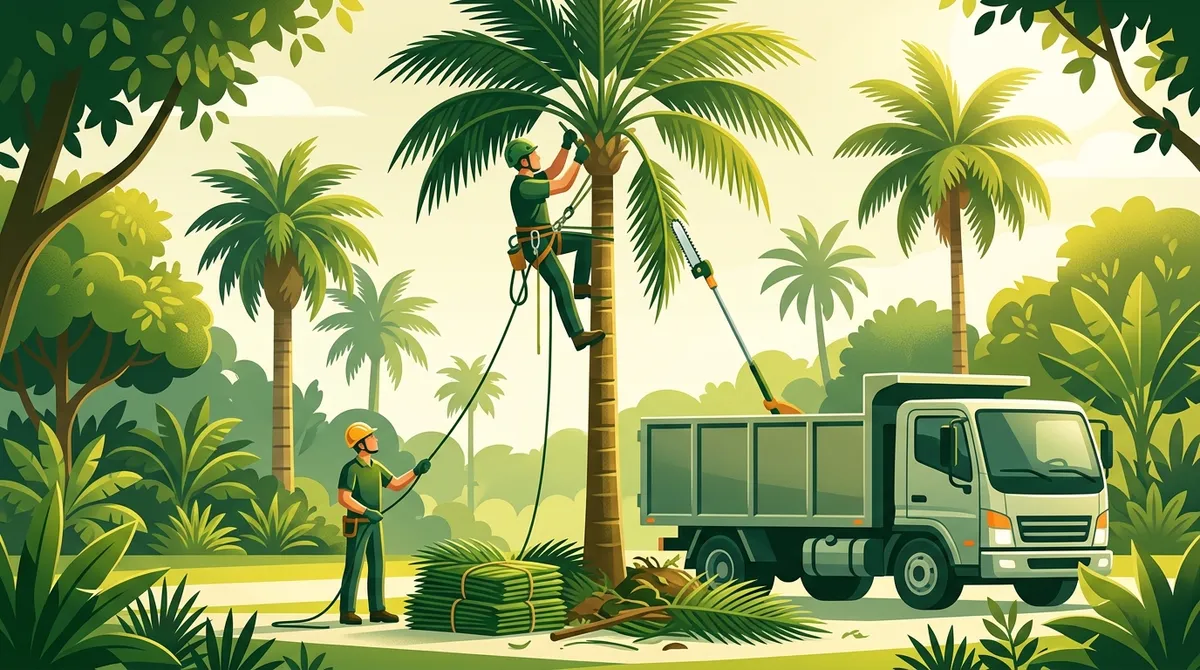
A professional palm tree trimming service goes beyond simply cutting fronds. When you hire a qualified team, here’s what the process typically involves:
- Initial Assessment: The crew inspects the tree for signs of disease, pest damage, or structural concerns before work begins.
- Dead Frond Removal: All brown, yellow, or fully dead fronds are removed cleanly at the base to prevent tearing damage to the trunk.
- Seed Pod and Flower Stalk Removal: Fruiting bodies and seed clusters are cut away to reduce weight and mess.
- Canopy Shaping: The remaining green fronds are evaluated, and the canopy is shaped for a balanced, healthy appearance.
- Debris Cleanup: All cut material is gathered and hauled away, leaving your property clean and tidy.
Professional teams use proper equipment and techniques to avoid over-trimming, which is a common mistake that can seriously damage palms. Only green fronds that are growing below horizontal should be removed — cutting healthy fronds stresses the tree. You can explore related tips in our article on palm tree trimming mistakes Dover homeowners must avoid.
Palm Tree Trimming Cost in Tampa
Cost is one of the first questions property owners ask. The price of palm tree trimming in Tampa varies based on several factors. Industry data shows national averages range from $270 to $450 per service, though Tampa-area pricing may differ based on tree height, access, and the number of trees involved.
| Factor | Impact on Cost |
|---|---|
| Tree height | Taller trees cost more due to equipment and safety requirements |
| Number of trees | Bundle pricing often reduces cost per tree |
| Accessibility | Trees near fences, structures, or power lines require more care |
| Condition of tree | Neglected palms with heavy debris take longer to trim |
| Debris removal | Hauling away fronds and pods may be included or an add-on |
The best way to get an accurate price is to request an on-site estimate. At Wayne & Sons Landscaping & Junk Removal, we provide transparent, upfront estimates with no hidden fees. You’ll know exactly what you’re paying before work begins. You can also view our profile on Thumbtack to see customer reviews and service details.
DIY vs. Professional Palm Tree Trimming
Some homeowners consider trimming their own palms to save money. While it may seem straightforward, DIY palm tree trimming carries real risks. Here’s a side-by-side comparison:
| Consideration | DIY Trimming | Professional Trimming |
|---|---|---|
| Safety | High fall and injury risk | Trained crew with proper equipment |
| Tree health | Risk of over-trimming or cutting wrong fronds | Proper technique preserves tree health |
| Equipment | Must rent or purchase specialized tools | All equipment included in service |
| Debris cleanup | Homeowner responsible for disposal | Professional crews handle all cleanup |
| Time investment | Significant time required | Completed quickly by experienced team |
For most property owners, the time savings and safety benefits of hiring a professional far outweigh the cost. This is especially true for tall palms or trees near structures. You can read more about this topic in our article comparing DIY vs. professional lawn care services.
Hurricane Preparation and Palm Tree Safety
Tampa sits in one of the most hurricane-prone regions in the United States. That makes storm preparation a critical part of palm tree care. Properly trimmed palms are far more wind-resistant than neglected ones. A heavy, overgrown canopy acts like a sail during high winds, putting enormous stress on the trunk and root system.
Here are key steps to prepare your palms before hurricane season:
- Schedule a pre-season trim: Remove all dead fronds and seed pods before June, the official start of hurricane season.
- Check for structural weakness: A professional can spot signs of disease or trunk damage that may make a tree unstable in a storm.
- Clear the surrounding area: Remove other landscape debris or nearby objects that could become projectiles.
- Plan for post-storm cleanup: Know who to call if storm damage occurs. Our team offers storm debris removal services across the Tampa area.
Taking these steps reduces risk significantly. If a storm does cause damage, prompt removal of fallen fronds and hazardous material is essential for safety and property recovery.
Choosing the Right Palm Tree Trimming Company in Tampa
Not all landscaping companies are equally qualified for palm tree care. When evaluating your options, consider the following:
- Years of local experience with Tampa Bay’s palm species and climate
- Proper licensing and insurance coverage
- Clear, upfront pricing with written estimates
- A track record of customer satisfaction and reviews
- Full-service offerings including cleanup and debris removal
- Availability for emergency or post-storm services
Local experience is especially valuable. A team familiar with Tampa’s tropical conditions, city regulations, and common palm species will deliver better results than a general contractor without that background. Our related resource on professional tree service in Tampa goes deeper into what makes a qualified provider stand out.
Additional Landscaping Services That Complement Palm Care
Palm tree trimming is often just one part of a larger property maintenance plan. Many Tampa homeowners and property managers also benefit from coordinating related services at the same time. This approach saves time and can reduce overall costs.
Services that pair well with palm tree trimming include:
- Hedge trimming and shrub care to maintain a consistent, polished landscape
- Down tree removal for damaged or fallen trees after storms
- Full-service landscaping including lawn care and garden maintenance
- Junk removal to clear yard debris, old equipment, or renovation waste
Bundling these services into a regular maintenance schedule keeps your property looking its best year-round without the need to coordinate multiple contractors. Our team at Wayne & Sons handles all of this under one roof, making the process as convenient as possible for busy homeowners and property managers alike.
Serving the Greater Tampa Bay Area
Palm tree trimming needs don’t stop at Tampa’s city limits. The surrounding communities — including Brandon, Valrico, Riverview, Seffner, Apollo Beach, and Sun City Center — all have dense concentrations of palms that require regular maintenance. Our service area covers Hillsborough County and beyond, so quality professional care is never far away.
If you’re curious about what professional palm care looks like for nearby communities, check out our guides on palm tree trimming in Valrico and palm tree trimming in Progress Village. You can also visit our Google Business Profile to read what our customers are saying about our work across the region.
Conclusion
Palm tree trimming in Tampa is not a service you want to postpone. Overgrown palms create safety hazards, reduce curb appeal, and become more difficult and costly to manage over time. Regular professional trimming keeps your trees healthy, your property safe, and your landscape looking sharp throughout the year.
Whether you’re preparing for hurricane season, improving a home for sale, or simply keeping up with routine maintenance, a professional landscaping team makes the process easy and stress-free. With transparent pricing, thorough cleanup, and over 15 years of experience in the Tampa Bay area, Wayne & Sons Landscaping & Junk Removal is ready to help.
Get in touch with our team today to schedule your palm tree trimming service or request a free estimate. You can also call us directly at (813) 452-1570 — we’re ready to help keep your palms looking their best.
FAQs
Q: How much does palm tree trimming cost in Tampa?
A: Palm tree trimming in Tampa typically falls within the national average range of $270 to $450 per service, though costs vary based on tree height, accessibility, number of trees, and current condition. The best way to get an accurate price is to request an on-site estimate from a qualified local landscaping company that provides transparent, upfront pricing.
Q: What is the best time of year to trim palm trees in Tampa?
A: Late spring — just before hurricane season begins in June — is generally the best time to trim palm trees in Tampa. Removing excess fronds and seed pods before storm season reduces wind resistance and lowers the risk of frond loss or tree damage during high winds. Many property owners also schedule a second trim in the fall.
Q: How often should palm trees be trimmed in the Tampa area?
A: Most residential palms in Tampa should be trimmed once or twice per year. Trees located near rooftops, fences, or high-visibility areas may benefit from more frequent trimming. A professional landscaping team can assess your specific trees and recommend a maintenance schedule suited to your property.
Q: Do I need a professional for palm tree trimming, or can I do it myself?
A: While DIY trimming is technically possible for shorter palms, professional service is strongly recommended for safety and tree health reasons. Professionals use proper equipment, follow correct cutting techniques to avoid over-trimming, and handle all debris removal. For tall palms or trees near structures, hiring a licensed professional is the safest and most efficient option.
Q: Does palm tree trimming help with hurricane preparedness in Tampa?
A: Yes, properly trimmed palms are significantly more wind-resistant than overgrown ones. Removing dead fronds and heavy seed pods reduces canopy weight and wind resistance, which helps the tree withstand strong gusts during hurricanes and tropical storms. Scheduling a professional trim before hurricane season is one of the most practical steps Tampa property owners can take to protect their landscape.
Our Service Area